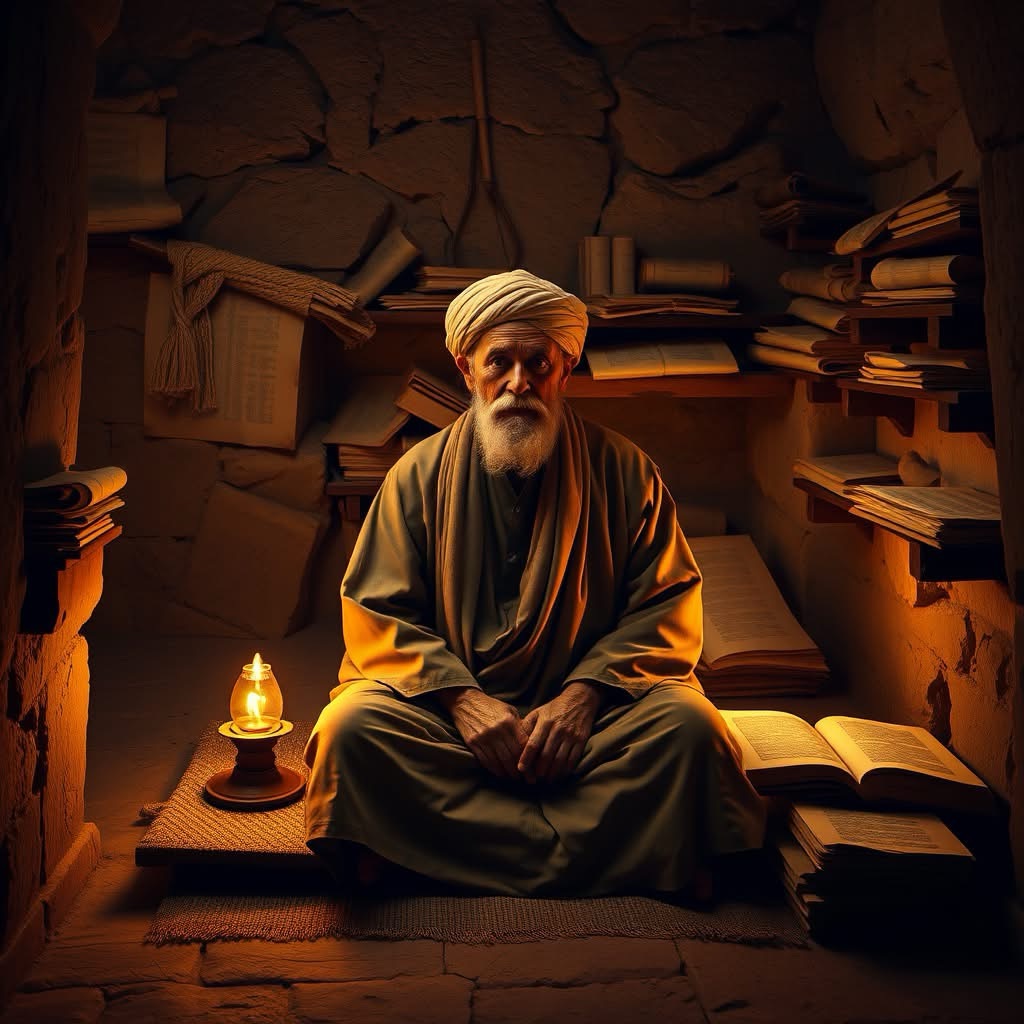

Ka‘b al-Ahbar: A Historical, Scholarly, and Spiritual Icon
Throughout Islamic history, there have been figures whose knowledge, piety, insight, and understanding acted as a bridge between past and present. Among them, Ka‘b al-Ahbar stands out as a luminous figure—originally one of the greatest Jewish scholars who, upon recognizing the truth, embraced Islam and contributed immeasurably to its intellectual heritage.
Early Life and Scholarly Background
Ka‘b al-Ahbar’s full name was Ka‘b ibn Mati‘ al-Himyari. Hailing from a notable Yemeni tribe, he was considered one of the most learned scholars among the People of the Book. He possessed a profound understanding of the Torah, Psalms, Talmud, and the history of Bani Israel.
He was called “al-Ahbar” because in Arabic, a scholar well-versed in divine scriptures, ancient history, and jurisprudential details was referred to as a ḥabr. His expertise went beyond basic knowledge—he knew the subtle nuances of religious law, hidden historical details, and the politics of the Israelites. When he embraced Islam, his knowledge immediately elevated the intellectual landscape of the Muslim community.
Conversion to Islam
Ka‘b al-Ahbar accepted Islam during the Caliphate of Umar ibn al-Khattab (RA). He had repeatedly read prophecies in his scriptures about Muhammad ﷺ’s characteristics, moral excellence, and his role as the final prophet, yet had not encountered the true message firsthand.
Upon visiting Medina, observing the companions of the Prophet ﷺ, and witnessing the light of the Quran, he recognized: this is the religion foretold in the Torah. He then embraced Islam under the guidance of Umar ibn al-Khattab (RA). His conversion marked a spiritual transformation from worldly, political, and scholarly pursuits to the illumination of divine truth.
Status and Contributions in Islam
Ka‘b al-Ahbar was a Tabi‘i, as he did not witness the Prophet ﷺ directly. Yet his rank was often considered higher than many among the Tabi‘un.
Association with Prominent Companions
- Umar ibn al-Khattab (RA)
- Uthman ibn Affan (RA)
- Abu Hurairah (RA)
- Mu‘adh ibn Jabal (RA)
- Abdullah ibn Abbas (RA)
Umar ibn al-Khattab particularly consulted him on historical and People of the Book-related issues.
Preserver of Knowledge of Previous Scriptures
Before Islam, Ka‘b al-Ahbar had an intricate understanding of Torah, Psalms, Joshua, Samuel, Isaiah, and other scriptures, as well as the history and fate of the Israelites. This knowledge, transmitted to Muslims, is known as Isra’iliyat, which fall into three categories:
- Agreeing with Quran and Hadith → Acceptable
- Contradicting Quran → Rejected
- Neither clearly agreeing nor opposing → Left undecided
Ka‘b al-Ahbar’s major contribution was contextualizing this ancient knowledge within an Islamic framework.
Relationship with Umar ibn al-Khattab
Umar ibn al-Khattab respected Ka‘b al-Ahbar’s knowledge deeply because he possessed mastery over divine scriptures, was an expert on prophets’ history, and understood the spiritual and political affairs of the Israelites. Though Umar valued his advice, final decisions always aligned with Quran and Sunnah.
Scholarly Contributions
1. Quranic Exegesis
Ka‘b al-Ahbar explained the historical background of many verses, including:
- The destruction of the people of ‘Ad
- Battles of the Israelites
- Pharaoh’s signs
- Prophecies of the Prophet ﷺ in the Torah
- History of the Sabaeans
2. Signs of the Last Day
He shared Jewish prophecies of the end times with Muslims—some accurate, some weak—but all valuable for historical and scholarly insight.
3. Chronology of Prophets
He arranged prophets’ histories sequentially, providing later exegetes a solid framework for understanding prophetic timelines.
Reliability of His Narrations
Scholars agree that Ka‘b al-Ahbar was truthful, trustworthy, free from deceit, and well-intentioned toward Islam. However, his narrations are not considered Hadith. Their reliability is evaluated based on agreement or contradiction with the Quran, or left undecided if unclear.
Spiritual Dimension
After embracing Islam, Ka‘b al-Ahbar displayed humility, God-consciousness, and piety. He often said:
“I had read the scent of Muhammad ﷺ in the Torah countless times, but when I heard the Quran, I realized this is the final divine light sent from the heavens.”
Death
Ka‘b al-Ahbar passed away around 32 AH, leaving a legacy as one of the earliest and most influential scholars in Islam.
Conclusion
Ka‘b al-Ahbar was more than a Jewish scholar turned Muslim. He bridged the knowledge of past communities with Islamic scholarship. His life embodied knowledge, piety, research, historical insight, and divine light. Through him, Muslims gained access to the depth of previous scriptures, the history of prophets, and prophetic traditions of the Last Day. He stands as a true scholar of truth, illuminating the path for generations.
Tags: Ka‘b al-Ahbar, Islamic History, Tabi‘un, Isra’iliyat, Islamic Scholars, Quranic Exegesis, Prophet Muhammad ﷺ
 2 Minute Worlds
Leave a comment