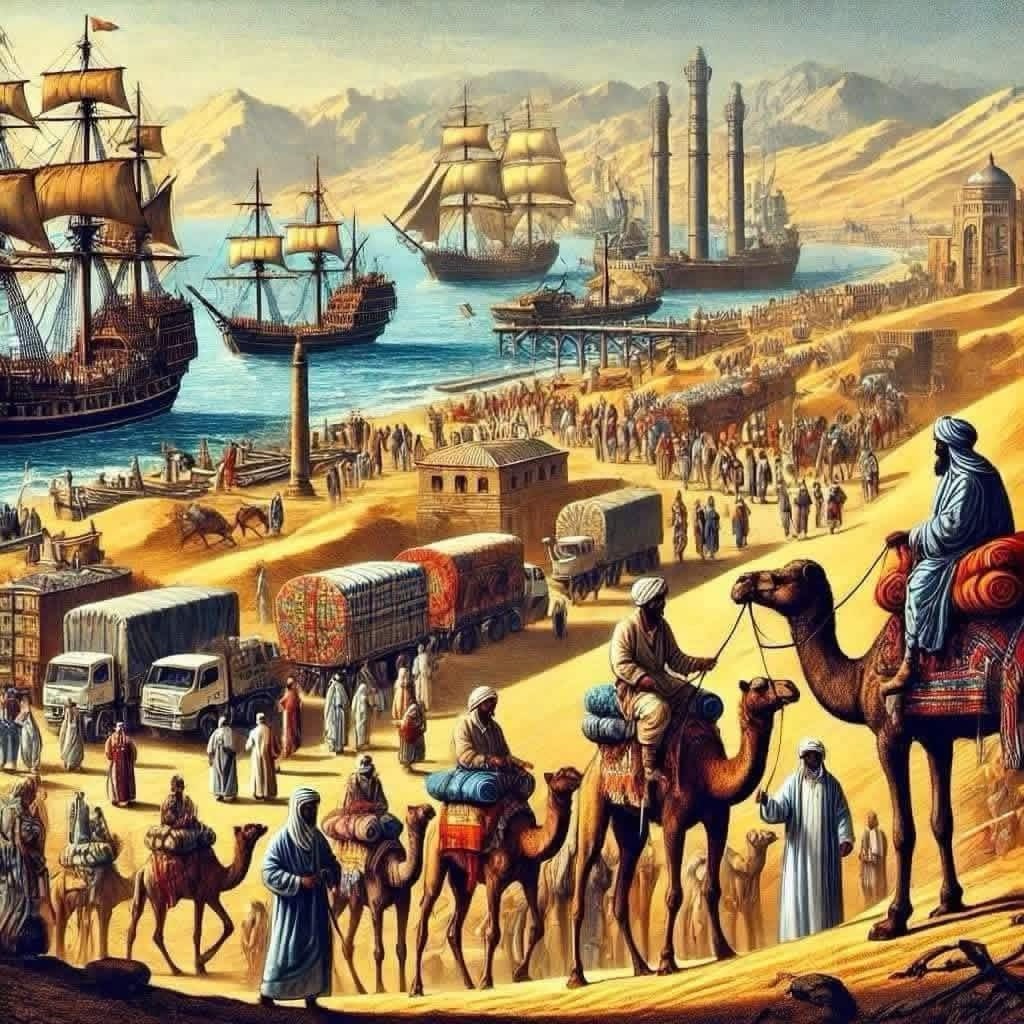
Before there was a Suez Canal slicing the desert in half like a surgeon with too much confidence, the Arabs had their own rhythm — a slow, deliberate heartbeat that pulsed from Beirut to Mecca, from the ports of Syria to the warm edge of the Red Sea.
Back then, trade didn’t just move — it breathed. Goods from distant lands arrived smelling of spice, sweat, and seawater. They were lifted onto the backs of camels that groaned like old poets and marched through heat that could melt your name off a gravestone. The merchants didn’t rush. They trusted time — or maybe they had an agreement with it.
Their routes weren’t just paths in the sand; they were stories. A jar of oil would travel past Medina, hear a prayer, pick up a rumor, and by the time it reached Sana’a, it had lived more lives than the man who carried it.
The Portuguese later came with their big ships and their bigger egos, circling Africa like a man too proud to ask for directions. They thought the sea made them powerful. The Arabs knew better. They had carved their power out of dust and patience. Their roads were shorter, cheaper, and built not from stone but from trust — a fragile kind of currency that somehow never lost its value.
Some say the Suez Canal changed everything. Maybe it did. But if you listen closely — somewhere between the dunes — you can still hear the faint jingle of camel bells and the laughter of traders who once stitched the world together, one grain of sand at a time.
 2 Minute Worlds
Leave a comment