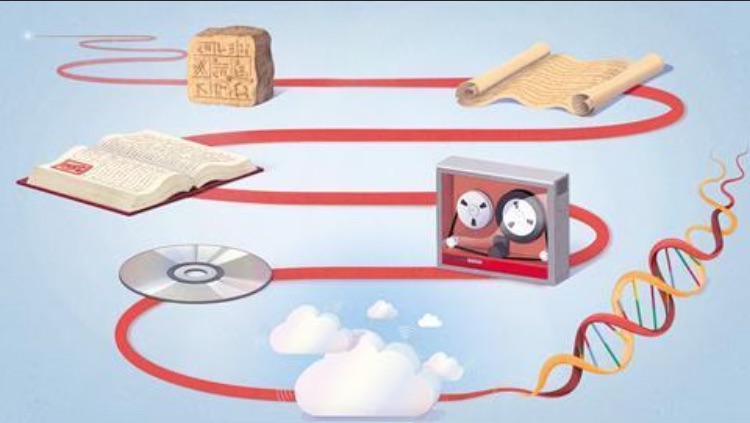
First there were cassettes. You flipped them over with a pencil when the tape got stuck, praying your favorite song didn’t get chewed up.
Then came CDs and DVDs, shiny little mirrors you could fry an egg on if you left them in the car.
Then “the cloud.” Invisible, magical, and mysterious — like putting your photos in a sky you didn’t own and trusting nobody would drop them.
But the future isn’t stopping at the cloud. Soon you’ll carry all your movies in a speck of crystal smaller than a rice grain. If you sneeze, you could lose every Marvel film.
A few years later, someone in a lab will say:
“What if we use DNA? After all, life has been storing information for billions of years.”
They’ll store Netflix inside a strand of goo and you’ll wonder if your playlist is technically alive.
Then come quantum drives — storage that exists in two places at once, until you look at it. Schrödinger’s USB stick. You open it and find both your files and not-your-files at the same time.
Eventually, storage stops being “somewhere.” It’s in you, around you, part of the air you breathe. Your vacation photos live in a harmless bacterium on your skin, your tax returns in a dust mote on your desk.
When your grandkid asks, “Where did people keep their data back in 2025?” you’ll tell them about clouds and discs and cassettes. They’ll laugh. “You mean your memories weren’t in your blood?”
And you’ll laugh too — but quietly. Because you’ll still remember the sound of rewinding a tape with a pencil. And that’s something no quantum drive will ever replace.
 2 Minute Worlds
Leave a comment