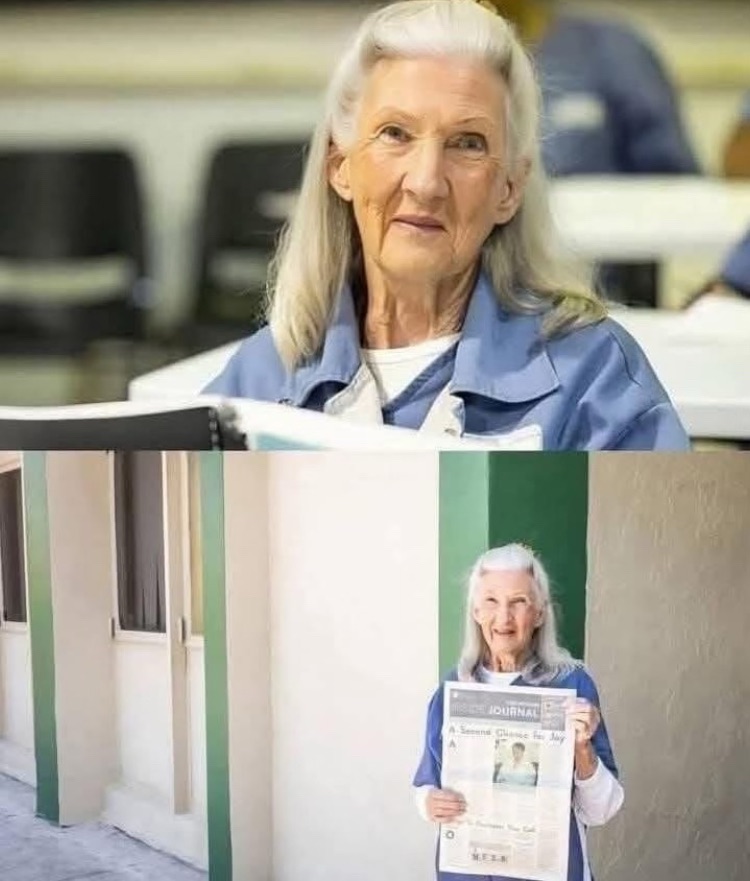
In an American prison cell, cold enough to make breath visible, Helen waits. Her face is pale, her eyes switched off. She looks through the bars like someone waiting for a bus that doesn’t run anymore.
They put her here in the ’70s for a murder she didn’t commit. Wrong lawyer, wrong courtroom, wrong decade. She was twenty-six. The verdict came fast. The tragedy came faster — the moment they took her baby away. No hug. No goodbye. Just a photo curling at the edges.
Every birthday she writes her son a letter. Forty years. Forty letters. No stamps. No mailbox. Just a rusty box under her bunk like a time machine that never leaves.
Somewhere along the way she stopped being a prisoner. She started teaching women to read. Comforting the ones who’d given up. They called her Mama Helen, and she tried to believe it.
In 2019, strangers open her case file and the truth spills out like coins from a broken slot machine. DNA says what her voice couldn’t: she didn’t do it. Forty-three years after they locked her up, the gates swing open.
The world outside feels counterfeit. Streets she knew are gone. Phones talk back now. But her heart is still stuck on the same channel — a baby’s cry she hasn’t heard in decades.
Volunteers find her son. He’s an engineer. He thinks his mother died before he learned to walk.
They meet in a park. She shuffles forward, hands trembling, lungs full of rust. He stands frozen like someone seeing a ghost in daylight. Then she says his name. That’s all it takes. No tests. No paperwork. Just a hug big enough to erase forty-three birthdays.
Now Helen lives with him and his kids. She tells her story in prisons and classrooms. She doesn’t cry anymore when she tells it — she gives it away like a gift.
“My body was locked up for forty-three years,” she says,
“but my soul was never in prison.
It was busy waiting for this hug.”
 2 Minute Worlds
Leave a comment