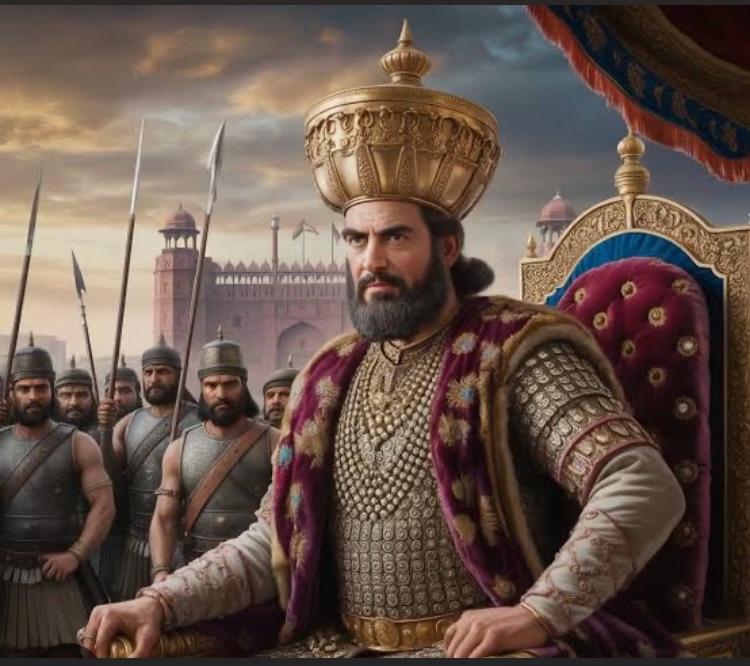
The year was 1739. Delhi shimmered like a jewel of the East. For two centuries, India under Akbar and Aurangzeb had produced nearly 27% of the world’s wealth—more than what the United States produces today. But that golden bird was caged in the talons of court intrigues and endless wars of succession.
When Aurangzeb died in 1707, the empire began to crack. In just twelve years, three emperors had risen and fallen. The world could smell weakness—and no one smelled it keener than Nadir Shah, the lion of Persia.
⸻
The insult that lit the fuse
In 1736, Nadir Shah seized the Persian throne. By then, Emperor Muhammad Shah Rangila had been sitting lazily on the Peacock Throne for seventeen years.
When Afghan rebels fled to India, Nadir Shah sent an envoy to Delhi, demanding their expulsion. The Mughal court kept him waiting for months. When he was finally summoned, the ambassador was treated with cold contempt.
The insult burned like fire in Nadir Shah’s chest. By 1738 he had crushed Kandahar and turned his eyes toward Hindustan—not merely to punish, but to plunder.
⸻
The road to Delhi paved with blood
City after city fell. No fortress could resist the thunder of his cannons or the glint of his sword.
The Mughal army tried to stop him at Karnal, just 120 kilometers from Delhi. They had twice as many troops as Nadir Shah—yet in three hours, the Persian cavalry annihilated 30,000 Mughal soldiers. The proud Mughal host dropped its weapons on its own soil.
At first, Nadir Shah considered taking ransom and leaving. But jealous Mughal nobles whispered in his ear: “Why take crumbs when you can have the feast? Delhi holds mountains of treasure.”
⸻
The conqueror enters Delhi
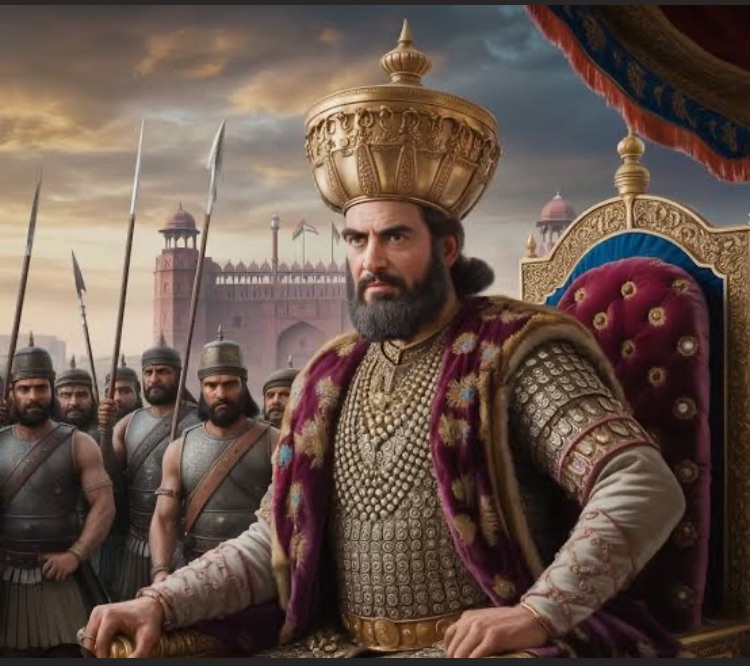
On March 20, 1739, Nadir Shah rode into Delhi like a sun-crowned conqueror. One hundred elephants led his procession, each bearing armed guards. Saluting cannons roared as he entered the Red Fort.
The very next day was Eid al-Adha. The Friday sermon in Delhi’s mosques was read not in the name of Muhammad Shah—but in the name of Nadir Shah. That evening, he visited the Mughal emperor to exchange greetings, his Persian robe shimmering like molten gold.
But in the streets, a whisper took wing: “The Persian king has been murdered!” The rumor turned Delhi into a hive of rage. Civilians and soldiers alike began slaughtering Nadir Shah’s men—three to seven thousand Persians were killed before dawn.
⸻
The massacre of Delhi
At sunrise, Nadir Shah rode through Chandni Chowk with his guards. A sniper’s shot killed one of his officers.
The Shah’s eyes blazed. He climbed the steps of Jama Masjid, looked down at the city, and gave a single, terrible command:
“Wherever a Persian soldier has been slain, leave not a single soul alive.”
The streets became rivers of blood. Eyewitnesses later claimed anywhere from 20,000 to 400,000 people were butchered. Delhi, once the heart of the world, fell silent under the weight of death.
⸻
The plunder of empires
When the killing ended, the looting began. Nadir Shah stripped Delhi of treasures so vast that historians still struggle to comprehend them.
To carry his spoils back to Persia, he used:
• 1,000 elephants
• 10,000 camels
• 7,000 horses
Among the treasures:
• Diamonds, rubies, and emeralds worth ₹25 crore
• The Peacock Throne itself worth ₹9 crore
• Gold and silver coins worth ₹25 crore
• Golden utensils worth ₹5 crore
• Silks and royal garments worth ₹2 crore
• Palace furniture, paintings, and curios worth ₹3 crore
• Jeweled weapons worth ₹1 crore
In all, ₹70 crore of 18th-century wealth—equivalent to $30 billion today—flowed out of India like a river of gold. In Persia, Nadir Shah was so rich he abolished taxes for three years.
Delhi, once the envy of the world, lay in ashes. And the Mughal Empire never recovered.
 2 Minute Worlds
Leave a comment