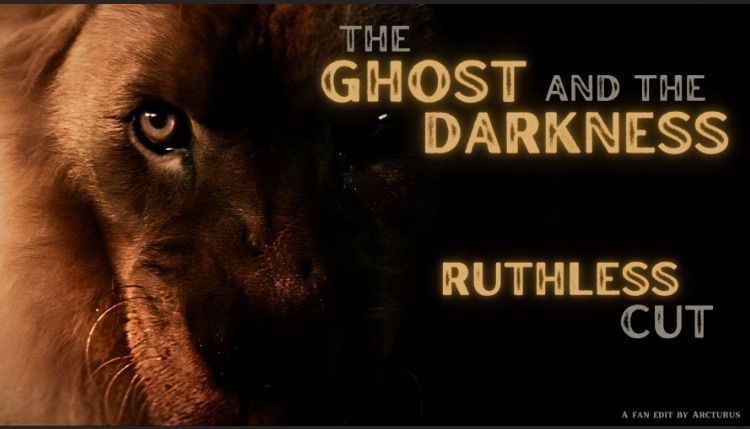
If you ask a seasoned hunter about the Uganda Railway project,
watch his eyes — they’ll widen instantly.
Because what was meant to be a symbol of progress
turned into a nightmare carved in blood.
The year was 1898.
The British Empire had ruled Uganda since 1894.
They wanted tea, coffee, and control over the Nile.
So they began building a railway track across the wilderness —
a steel ribbon meant to connect Africa’s heart to the sea.
But at Tsavo, in the thick jungle, the line met a problem:
a deep gorge, a running stream,
a place where only a bridge could be built.
⸻
Now picture this:
You’re not an engineer. Not a soldier.
Just a laborer, swinging hammers under the sun by day,
sleeping in a canvas camp by night.
The jungle is endless.
When darkness falls, silence swallows everything.
Even your heartbeat sounds too loud.
At first, it was just one missing man.
No one cared. Maybe he ran away.
The next night — another man gone.
Blood stains on the ground.
Tracks disappearing into the trees.
Fear crawled into the camp like a living thing.
Guards were posted. Fires lit.
But whatever hunted them moved like smoke,
silent and clever,
and it never missed.
⸻
Captain John Henry Patterson had seen death before,
but not like this.
Men were vanishing every night.
The project was collapsing.
If the workers fled, the railway would die — and so would his career.
Patterson swore to himself:
“I will save these men. And I will finish this bridge.”
One night, from a tree-top hideout,
he finally saw them.
Two male lions, enormous, silent,
moving like shadows through the grass.
They snatched a goat and melted back into the dark.
The rumors were true.
Two killers.
The workers called them “Ghost” and “Darkness.”
One lion would eventually kill 24 men.
The other, 10 more.
Patterson suspected it was even higher.
In his memoir, he claimed 135 lives were taken in total.
⸻
On December 9, Patterson took his first shot.
Two bullets hit the first lion — but it slipped away into the night.
Hours later, he ambushed it again.
This time, the bullet pierced its heart.
Eight men struggled to carry its massive body.
But the second lion was smarter.
Faster. Deadlier.
It stalked and killed even as it hunted for Patterson himself.
For 20 days, it played a deadly game,
until finally nine bullets brought it crashing to the earth.
⸻
The railway bridge was completed.
The empire celebrated its triumph.
And the two lions — now lifeless —
were skinned and sent to the Field Museum in Chicago,
where they remain to this day,
their glass eyes staring at crowds of tourists from around the world.
⸻
But a question still haunts the story:
Why did these lions hunt men?
Were they starving? Sick? Just evil?
No one knows for sure.
If you were one of those workers,
alone in the jungle,
knowing something out there wanted to eat you —
would you have stayed?
Or would you have run?
 2 Minute Worlds
Leave a comment