Rome’s Dark Past: Cruelty, Slavery, and the Convenient Amnesia of the West
Rome, Memory Loss, and the Convenient Amnesia of Empires
Every empire carries a suitcase. Some keep medals inside, some stash love letters, and a few hide stories that start with whispers and end with public executions.
The Romans, legendary for marble columns and complicated hairstyles, kept a suitcase too. Only theirs smelled faintly of blood, sweat, and an inconvenient past.
Today, their cultural descendants in the United States and Britain confidently lecture others about slavery, as if their own ancestral archives were polite novellas instead of crime reports. History, however, refuses to cooperate with curated nostalgia.
Rome’s Operating System: Slavery
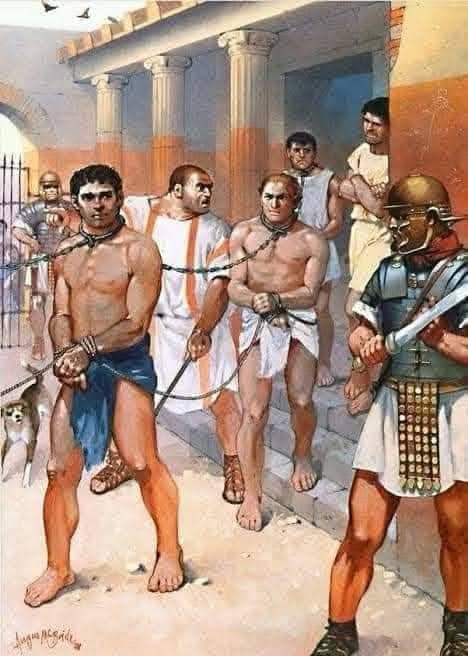
In the Roman Republic, exploiting slaves wasn’t a deviation—it was infrastructure. Sexual access to slaves, forced prostitution, and multiple marriages were routine.
In public markets, enslaved men, women, and even children were displayed naked, auctioned to whoever had the loudest coin purse.
Violence as Entertainment and Policy
The cruelty wasn’t accidental. It was organized, predictable, and disturbingly creative.
- Gaius Flaminius is said to have slaughtered a slave to entertain a guest. Not fully verified, but hauntingly plausible.
- Publius Vedius Pollio fed slaves to fish—verified by Seneca with visible disgust.
- Augustus allegedly executed a slave for eating one of his quails. Historically noted, though inconsistently sourced.
Courts refused slave testimony. Execution methods read like a catalog of nightmares: burning, chaining, wild beasts, gladiatorial death.
Those too weak to work were said to be abandoned on Tiber Island without food—a practice historians debate but rarely dismiss outright.
The Modern Irony Report
Fast forward two millennia. Some descendants of Roman civilization, now padded with suits, diplomas, and global Wi-Fi, critique Islamic teachings on slavery with unprecedented confidence.
Confidence built on forgetting the very empire that normalized brutality until the day it collapsed under its own moral weight.
Authenticity Review: What’s Verified?
Historically Confirmed
- Sexual exploitation of slaves (Bradley, Harper)
- Public, sometimes nude, slave markets (Finley, Roman legal texts)
- Torture and execution at the master’s discretion (Ulpian, Digest of Justinian)
- Gladiatorial enslavement and beast punishment
Historically Attested Anecdote
- Vedius Pollio feeding slaves to fish (Seneca)
Possibly True (Weak Documentation)
- Augustus killing a slave for eating a quail
- Abandoning weak slaves on Tiber Island
Low Documentation / Likely Dramatization
- Gaius Flaminius killing a slave for guest entertainment
Conclusion: The Suitcase Remains Open
Empires leave footprints. Some elegant, some monstrous. Rome left both.
And the global conversation on slavery deserves honesty, not historically curated amnesia.
If history teaches anything, it’s that civilizations rise, fall, and occasionally pretend they never did certain things. But the record stays there—quiet, humming, uncooperative.
References
- Seneca, De Ira (On Anger)
- Keith Bradley, Slavery and Society at Rome
- Kyle Harper, Slavery in the Late Roman World
- Moses I. Finley, Ancient Slavery and Modern Ideology
- Digest of Justinian (Ulpian)
- Cambridge Ancient History Series
 2 Minute Worlds
Leave a comment