Conquest of Syria -Part 3
Conquest of Syria History feels less like a chapter from the past and more like one of those surreal mornings where the city wakes before the sun does, stretching its arms, whispering something big is about to happen. Madinah was shimmering that day — too many footsteps, too many heartbeats, too many tribes answering a call that started far away in Yemen and somehow echoed all the way across faith, fear, and fate.
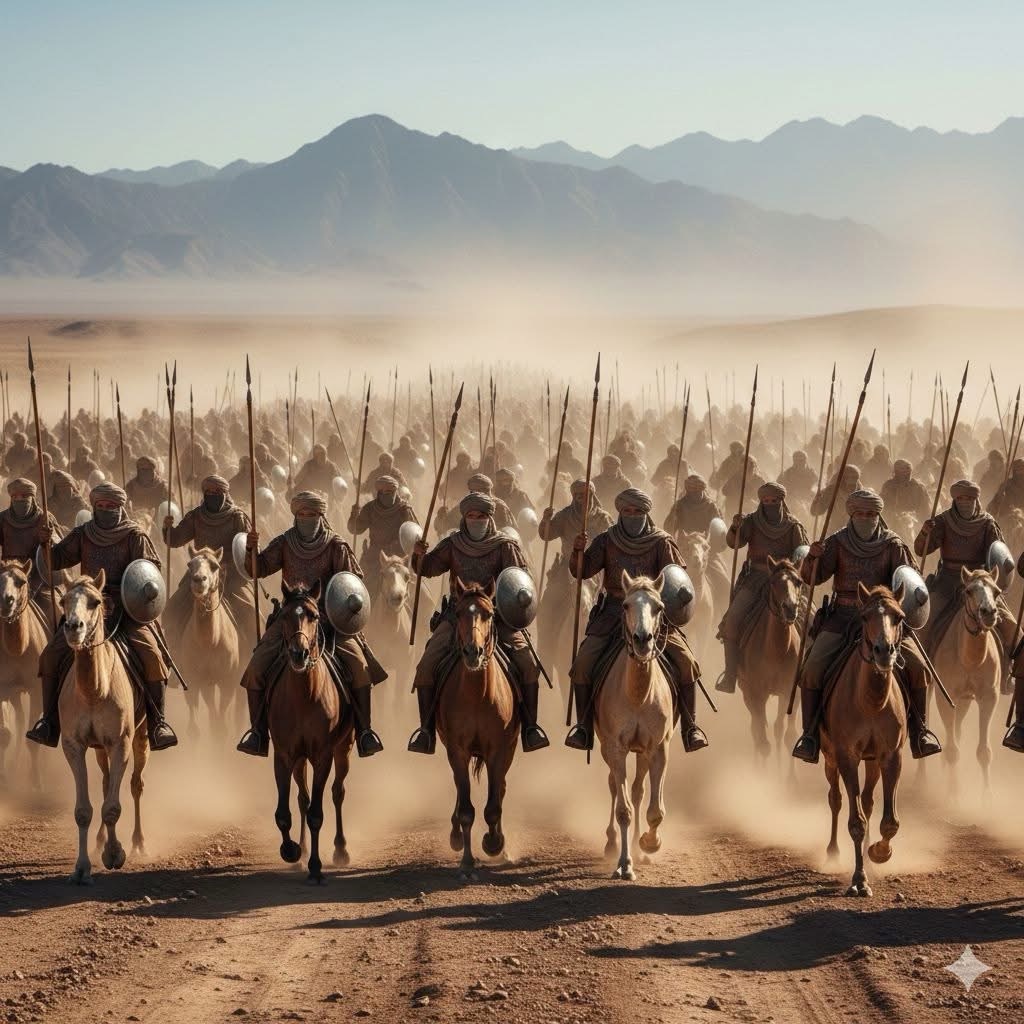
The first wave rode in with polished spears and horses that looked like they’d been groomed by the wind itself. The chief of Hamir stood tall, said his salutations, offered poetry that floated in the air like a fragile glass ornament, and watched as Abu Bakr smiled the kind of smile leaders practice when they want to show strength without losing warmth.
After them came the tribe of Madhhij — same fire in the eyes, same restless hooves digging the earth. Qais ibn Hubayrah al-Mardi led them, a man looking like he’d swallowed a storm just to see what it tasted like. Abu Bakr listened to their verses, nodded, and prayed for their journey, like a father watching his children step onto a road with no promises.
Then came the Tayy tribe, led by Habis ibn Sa‘id. The man tried to dismount out of respect, but Abu Bakr stopped him — almost like saying, “We’re all standing on the same ground here, brother.” So Habis stayed on his horse, shook hands, and accepted the moment as it was.
Behind them, a river of soldiers kept flowing — the great tribe of Azd under Jundub ibn ‘Amr al-Dawsi. They passed like a marching horizon.
And then, like a punchline arriving late to a serious meeting, came a lone man with a bow. Abu Hurairah. Abu Bakr looked at him the way a CEO looks at an intern who accidentally brought a banana instead of a laptop to a board meeting.
“You don’t even know how to fight,” he laughed.
And Abu Hurairah shot back:
“One, I’m here for God. Two, I heard Syria’s fruits are worth the trip.”
Everyone cracked up — because sometimes humor is the only armor you can carry lightly.
More tribes followed — Banu Abs, then Kinana — every group armed, ready, and strangely hopeful. They weren’t just soldiers. They were families, homes packed in bundles, dreams wrapped in leather, weapons, and faith.
By the time all of Yemen had poured into Madinah, the city felt too small. Tents bloomed everywhere like desert flowers that refused to wilt. Food had to be rationed. Fodder was scarce. Even the air felt shorter, as if everyone was sharing the same breath.
So the chiefs gathered, sitting awkwardly, waiting for someone to break the silence. Eventually Hamir’s leader spoke, corporate-calm but visibly strained:
“Resource constraints are escalating. Animal feed is down. Supply chains are compromised. We need strategic deployment. Either authorize us to march toward the Syrian front… or formally dissolve the operation so we return.”
Abu Bakr nodded slowly — the nod of a man who carries an entire world on his shoulders.
“I waited,” he said, “because I thought more allies might join.”
But the chiefs clarified:
“No more reinforcements are coming. The system is at capacity. Send us out.”
And right then, Abu Bakr stood — not dramatically, not theatrically — just with that quiet decisiveness that flips history on its axis.
The march toward Syria was no longer a plan.
It was happening.
To be continued — adapted from Futuh al-Sham, al-Waqidi
 2 Minute Worlds
Leave a comment