The Sistine Chapel: When Art Became a Divine Operating System
In the broader landscape of global art assets, few creative initiatives have reshaped cultural consciousness the way the Sistine Chapel ceiling did. Positioned originally as an architectural tribute to the Temple of Solomon, the chapel stands 13 meters wide, 40 meters long, and rises 20.7 meters into a vault that feels tuned for revelation.
While the initial blueprint envisioned a serene night sky painted in deep celestial blues by Botticelli and Rosselli, the creative direction pivoted dramatically when Michelangelo reimagined the entire ceiling as a visual journey through sacred history. This was not an incremental improvement. It was a full-scale transformation strategy.
From Sculptor to Visionary Storyteller
It is essential to note that Michelangelo’s core competency was sculpture. He was not a painter by professional design. But competitive energy within the artistic ecosystem — especially with contemporaries like Leonardo da Vinci — nudged him to expand his operational bandwidth.
He erected a towering scaffold, working either standing or lying beneath the vast surface, translating divine narrative into visual architecture. The execution was physically demanding, yet the outcome demonstrates a level of strategic clarity rare even by today’s creative standards.
A Ceiling Divided Into Forty-Six Moments of Meaning
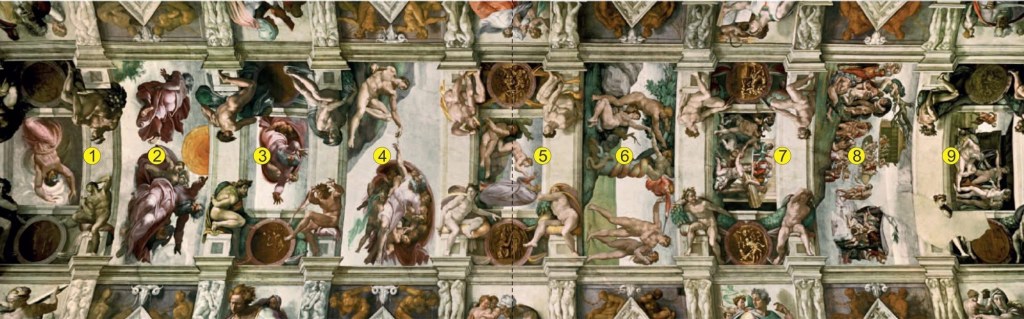
The Sistine Chapel ceiling is structured like a thematic portfolio. Forty-six sections orchestrate a multilayered experience where the side panels narrate stories of biblical prophets, while the central nine panels present a structured storyline of creation, humanity’s fall, and the resilience embodied through Noah’s journey.
The Central Narrative Arc
1–3: The Architecture of Creation
• Separation of light and darkness
• Formation of the sun and planetary bodies
• Division of water and land
These panels map humanity’s origin environment and establish the divine order of operations.
4–6: The Human Experiment
• Creation of Adam
• Creation of Eve
• Temptation, failure, and the expulsion from Eden
This cluster highlights the emotional volatility and decision-making risks embedded in human nature.
7–9: Reset, Renewal, and Resilience
• Noah’s offering after the flood
• The Great Flood
• The shaming of Noah
This sequence delivers a narrative of collapse and recovery, reinforcing themes of mercy and restructuring after crisis.
Why This Ceiling Still Owns the Global Imagination
The Sistine Chapel ceiling is not simply a painting. It is a leadership move. A storytelling strategy. A fully realized experience design initiative intended to make viewers look up and, in doing so, think higher.
The project merges sculpture-level precision with narrative-driven illustration, generating an uplift effect that has powered centuries of engagement. Metrics such as global recognition, emotional resonance, and cross-cultural relevance position it as a long-term heritage asset.
A Final Note for Art Enthusiasts
Whether or not the Mona Lisa dominates fame charts is secondary. The ceiling remains a mega-project in the history of creativity, executed with vision, agility, and a commitment to elevating the human spirit.
I share this exploration not as an art specialist but as a student of human civilization, fascinated by how a single artistic intervention can become a strategic bridge between earth and the eternal.
 2 Minute Worlds
Leave a comment