
Crypto in Pakistan feels like a room where everyone is speaking at once — regulators, exchanges, ministers, YouTube gurus — but no one answers the same simple question twice. Is crypto legal? Is it banned? Is it the future? Or just another shiny promise parked next to unfinished motorways and delayed dreams?
This is a complete roundup of crypto regulation in Pakistan, who is doing what, and whether this moment is real — or just another carefully staged illusion.

The Legal Status of Crypto in Pakistan: Grey Is the Official Color
Let’s start with the uncomfortable truth.
Crypto in Pakistan is neither fully legal nor officially banned. It exists in a grey zone — tolerated, debated, regulated in drafts, but never clearly embraced.
The State Bank of Pakistan (SBP) does not recognize crypto as legal tender. Banks are still cautious and inconsistent when it comes to crypto-related transactions. At the same time, the government has created new bodies and ordinances to regulate virtual assets.
In Pakistan, crypto is like a guest who has been living in the house for years, but no one has formally introduced him to the family.
The Virtual Assets Ordinance & PVARA: Structure on Paper
In 2025, the government introduced the Virtual Assets Ordinance, creating the Pakistan Virtual Assets Regulatory Authority (PVARA).
On paper, this is a big deal.
PVARA is supposed to:
License crypto exchanges Regulate virtual asset service providers (VASPs) Enforce AML and compliance rules Bring crypto into a taxable, trackable framework
But ordinances in Pakistan are temporary by nature. They expire unless converted into permanent law by parliament.
So for now, regulation exists — but on probation.
Who Is Running the Show?
Pakistan Crypto Council (PCC)
The Pakistan Crypto Council was formed to coordinate policy, industry input, and global engagement.
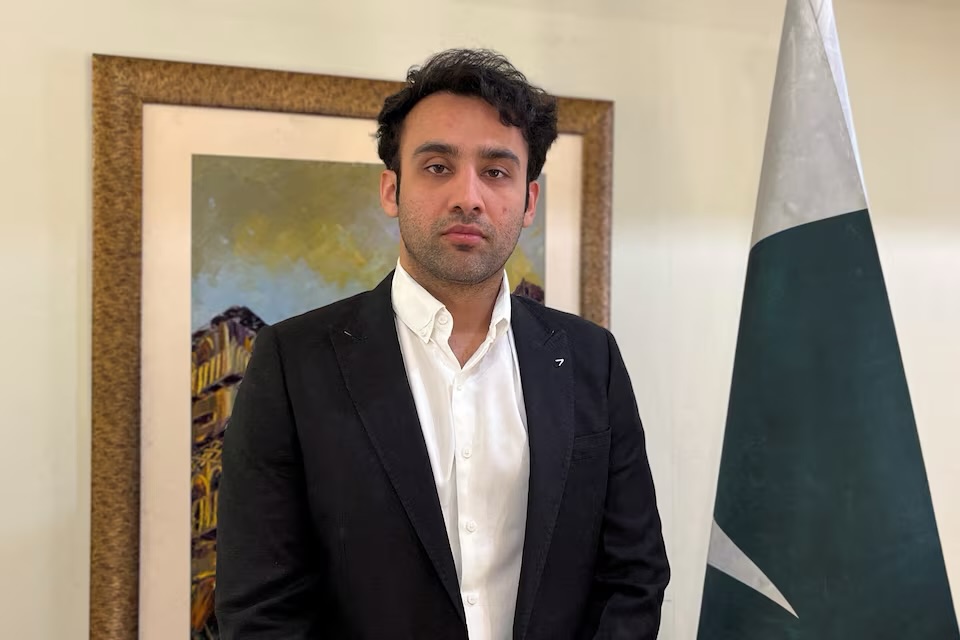
Chaired by the Finance Minister CEO: Bilal Bin Saqib International advisors include figures linked to global exchanges
The council talks about:
Blockchain adoption Tokenization of real-world assets Attracting foreign investment
It sounds ambitious. It also sounds familiar.
Binance, HTX, and the Big Names
This is where things stop being imaginary.
Binance has received AML-related clearance and is moving toward licensing as a VASP. HTX (formerly Huobi) is also in the licensing pipeline. Pakistan has signed MoUs with global exchanges to explore tokenization of government assets like bonds and treasury bills.
This is not something countries do casually.
It suggests that, at least at the policy level, crypto is being taken seriously — not just as trading, but as financial infrastructure.
Adoption: Pakistanis Are Already Inside the System
Here’s the part officials rarely explain properly:
Pakistanis are already using crypto.
Millions of users trade via P2P markets. Pakistan consistently ranks among top countries globally for retail crypto adoption. Freelancers, remittance receivers, and small traders rely on stablecoins quietly, daily.
The country didn’t “allow” crypto.
The people adopted it first.
The state arrived later — confused, cautious, and slightly offended.
Mining, Electricity, and Strategic Talk
There have been discussions about:
Using surplus electricity for Bitcoin mining Linking mining with AI data centers Exploring a strategic Bitcoin reserve
Some of this feels experimental.
Some feels like political signaling.
All of it is still early.
The Real Risks No One Likes to Admit
Crypto in Pakistan carries real dangers:
Legal uncertainty One notification can freeze accounts overnight. No investor protection If an exchange collapses or funds are lost, courts offer little clarity. Narrative exploitation Big words are often used to hide small answers.
This is where Pakistan’s old habit shows up:
clarity is delayed, confusion becomes leverage.
So Is Crypto in Pakistan Real or Another Delusion?
It’s real — but unfinished.
Crypto in Pakistan today is:
Not a scam Not fully legalized Not a miracle cure for the economy Not going away
It’s a system being slowly formalized after people already started using it.
The danger is not crypto itself.
The danger is pretending regulation exists before it actually protects citizens.
Final Thought
Pakistan doesn’t lack technology.
It lacks honesty at scale.
Crypto could be an opportunity — or just another chapter where ordinary people take the risk while institutions take the credit.
The difference will be decided not by announcements, but by laws that actually survive parliament.
Until then, crypto in Pakistan remains what it has always been:
Widely used. Poorly explained. Carefully controlled.
 2 Minute Worlds
Leave a comment