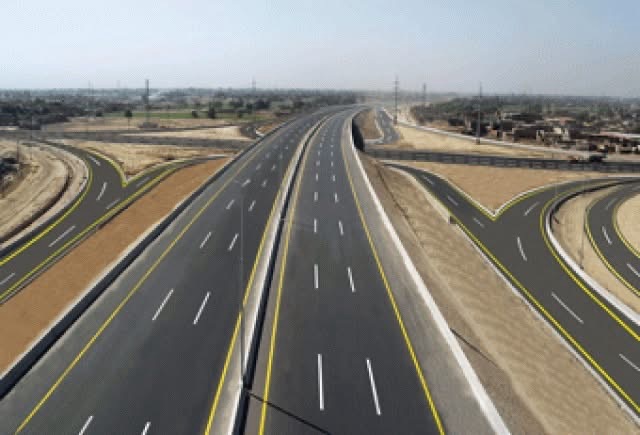
Sometimes a city stretches itself the way a person does in the morning—arms wide, back cracking—hoping the day will go easier this time. Lahore tried that too. Eighty-five kilometers of Ring Road already circling its ribs, with the blueprint whispering promises of a 103-kilometer full loop. A neat, corporate-style value proposition: reduced travel time, improved accessibility, optimized intra-city flow
And for a while, it almost felt like we were headed there. Sheikhupura to the airport? Easy. Lahore’s farthest corners? Practically neighbors now. The infrastructure team must have high-fived each other — user satisfaction metrics looking great.
Then, of course, the property mafia stepped in. They always do, the way pigeons always find fresh statues. Suddenly every new housing society was shouting the same thing: “Only minutes from Ring Road!” RUDA, despite branding itself as a next-gen city model, used the same slogan like an overeager intern pitching the same slide twice.
Because that’s the rule here: build a public-good project, and real estate cartels will swarm it faster than a Black Friday sale. Some government departments even start planning as if their KPI is: How to complicate a perfectly good project?
Look at the motorway. The GT Road is a full 100 kilometers shorter between Lahore and Rawalpindi, but travelers choose the motorway because time bends differently there. Or at least it used to. Because now, housing societies are mushrooming along it too — Faizpur to Kala Shah Kaku in Lahore, and all the way to Chakri in Rawalpindi. These will soon become dense enough to give any traffic modeler anxiety. Faizpur Toll Plaza already feels like a stressful group meeting where everyone talks at once.
Rawalpindi even gifted a dedicated interchange to the Army Welfare Trust — a kind of infrastructural VIP pass.
The motorway might survive the pressure for a while. The Ring Road? Not so lucky. Today it’s manageable. Give it a few years, and it may transform into the same congested bypasses it was meant to rescue us from. If you’ve ever been stuck on the Gujranwala Bypass, you’ve lived the trailer.
Elsewhere in the world, cities expand but planners keep their sanity and add buffer zones — those quiet spaces that protect neighborhoods from noise, pollution, and the general chaos of road life. Pakistan skips that step, as if silence were a luxury item. By regulation, you can’t build a housing society on agricultural land. Yet Lahore’s outskirts are embroidered with new societies anyway. If you ask whether all of them were “non-agricultural,” someone will cough and change the subject.
Urban growth isn’t the villain. Shortsightedness is. Remember Musharraf’s era? Car financing got easier, hundreds of thousands bought cars, and suddenly everyone felt like a protagonist in their own mobility story. Except the roads stayed the same. Traffic jams multiplied like overexcited rabbits. New roads came later, but the cities grew faster than the asphalt could keep up.
So here we are. Ring Roads, motorways, mega-projects — cities stretching themselves wide again. The real question is:
Are we planning for the future, or are we just planning for the next sales brochure?
 2 Minute Worlds
Leave a comment