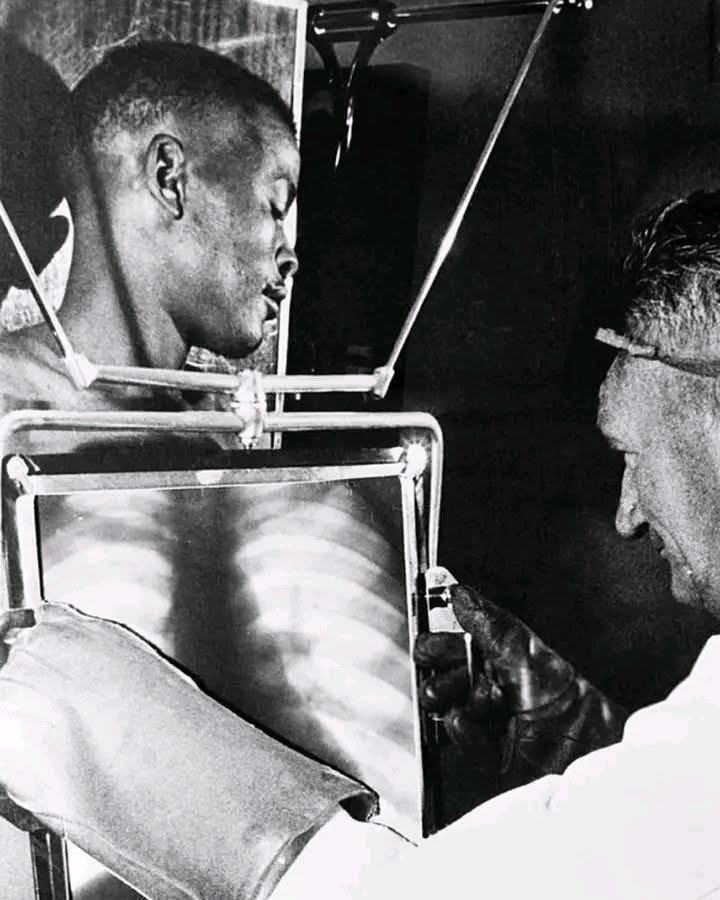
In 1954, something unusual happened at the De Beers diamond mines in Kimberley.
At the end of a long workday, miners did not go straight home. They stood in lines. Silent. Tired. Waiting their turn—not for wages, but for suspicion.
Each worker was ordered to stand in front of an X-ray machine.
Not because they were sick.
But because the company feared a diamond might be hiding inside their bodies.
This was the world built around diamonds—where stones were trusted more than people.
1867: A Child, a River, and a Stone That Changed Everything
The first diamond in South Africa was not found by a businessman or an empire-builder.
It was found by a farmer’s son, Daniel Jacobs, playing near the Orange River.
Children treated the shiny stones like toys. They passed from hand to hand.
One of them reached a neighbor, Schalk van Niekerk.
The boy’s mother laughed and gave it away for free.
That stone eventually landed with Dr. W. G. Atherstone.
He confirmed it was a 21.25-carat diamond.
When the Governor of the Cape Colony bought it for £500, the news spread faster than reason.
The diamond rush began.
Cecil Rhodes, Barney Barnato, and the Birth of an Empire
Two men from England understood something quickly.
The real power wasn’t in diamonds—it was in ownership.
In 1888, Cecil Rhodes and Barney Barnato merged their mining interests to form De Beers Consolidated Mines Ltd.
Kimberley became its heart.
From that moment, De Beers was no longer just a company.
It was a system. A gatekeeper. A global controller of desire.
The Workers Who Paid the Price
The mines ran on Black migrant labor.
Their lands had been taken.
Their choices were narrow.
Mining became survival.
Wages were minimal.
The work was lethal.
Between 1897 and 1899, over 1,000 miners died from accidents, lung diseases, infections, and exhaustion.
Their deaths did not stop production.
New workers replaced them daily.
Diamonds were rare.
Men were not.
Kimberley: Where Apartheid Learned to Walk
Kimberley was not just a mining town.
It was a rehearsal space for apartheid.
Neighborhoods divided by race Walls separating Europeans and Africans Bans on mixed marriages “Europeans Only” zones Strict control over African movement
The city sparkled.
Human dignity faded.
The X-Ray Years
By the 1950s, distrust had become policy.
Miners were scanned after shifts to ensure they had not swallowed diamonds.
The machines did not ask questions.
They simply looked through bodies.
Ownership had reached inside people.
The 1990s: The System Finally Cracks
Apartheid officially ended in the 1990s.
The laws changed.
The language softened.
But Kimberley’s soil still remembers.
The tunnels remain.
The X-ray rooms still echo.
This is not just the history of diamonds.
It is the quiet record of how much humanity was spent to make them shine.
 2 Minute Worlds
Leave a comment