Why Punjab Develops Faster Under the Sharif Family | Lahore Infrastructure Politics
Why Punjab Develops Faster Under the Sharif Family (Especially Lahore)
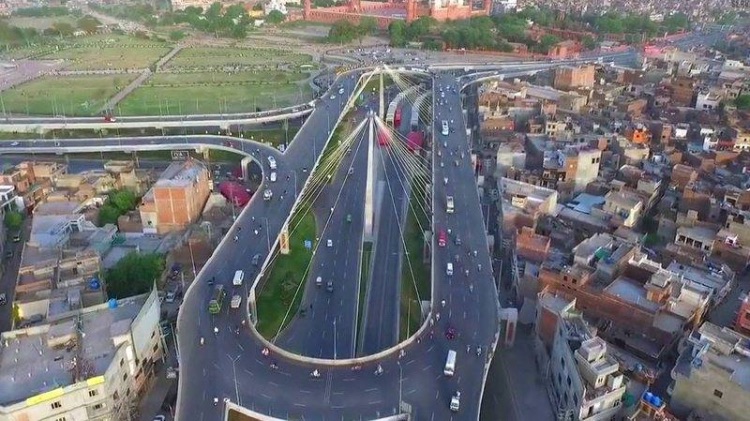
Whenever the Sharif family comes into power, Punjab—particularly Lahore—starts changing shape. Roads widen, flyovers appear overnight, parks get new grass, and infrastructure suddenly looks alive. The same intensity was not visible during the PPP era, military leadership, or even Imran Khan’s government. This isn’t coincidence. It’s a political development model.
The Sharif Development Formula
1. Punjab Is the Sharif Political Heartland
The Sharif family’s politics is rooted in Punjab, emotionally and electorally. Their voter base, legacy, and political survival depend on this province. Development flows where political return is guaranteed.
History agrees. In ancient Mesopotamia (around 2500 BCE), kings built canals and city walls not because they loved water management, but because visible structures convinced people of power faster than invisible reforms.
2. Visible Infrastructure Equals Fast Political Capital
Roads, bridges, metro lines, and beautification projects offer instant optics. A flyover can be inaugurated in months; education reform takes generations. Politics prefers what can be photographed.
Roman emperors in the 1st century CE understood this well. They paved roads across the empire while social inequalities quietly widened beneath the stones.
3. Total Command Over Punjab’s Bureaucracy
Punjab has Pakistan’s most centralized and responsive administrative machinery. Under the Sharifs, bureaucrats operate under strict timelines. Files move fast. Orders are executed, not debated.
Other governments either lacked this control or didn’t trust the system enough to push it this hard.
4. Lahore as a National Showroom
Lahore isn’t treated like a city—it’s treated like a display window. When Lahore shines, television cameras shine with it. Development here sends a national message: “We are delivering.”
This strategy is old. Babylon, Rome, and later imperial capitals were beautified while peripheral regions waited.
Why Not the Same Under PPP, Military Rule, or Imran Khan?
PPP Era
The PPP’s political center lies in Sindh. Its governance focused more on welfare programs and income support than urban mega-projects. Federal instability further diluted focus.
Military Leadership
Military regimes prioritize strategic infrastructure—roads to borders, logistics corridors, and security assets. Beautification is not their objective.
Imran Khan’s Government
Imran Khan rejected large-scale optics-driven projects. His focus leaned toward governance narratives and anti-corruption messaging. Punjab’s entrenched bureaucracy resisted his decentralizing impulses.
The Hidden Cost of This Model
While Punjab advances, other provinces feel abandoned. Development becomes uneven. Social sectors lag behind concrete. National cohesion weakens.
The Roman Empire collapsed not because it lacked roads—but because justice failed to reach beyond the capital.
A Moral Reminder
The Qur’an warns against development that benefits only a few:
“So that wealth may not circulate only among the rich among you.” (Qur’an 59:7)
The Prophet Muhammad (peace be upon him) said:
“Each of you is a shepherd, and each of you is responsible for his flock.”
Modern governance demands balance: roads and schools, flyovers and hospitals, cities and villages.
Conclusion
Punjab’s transformation under the Sharifs isn’t magic or mystery. It’s targeted politics. Development follows votes. Cameras follow concrete. Lahore follows power.
The real question is not why this happens—but whether Pakistan can afford a future where development stops at provincial borders.
 2 Minute Worlds
Leave a comment