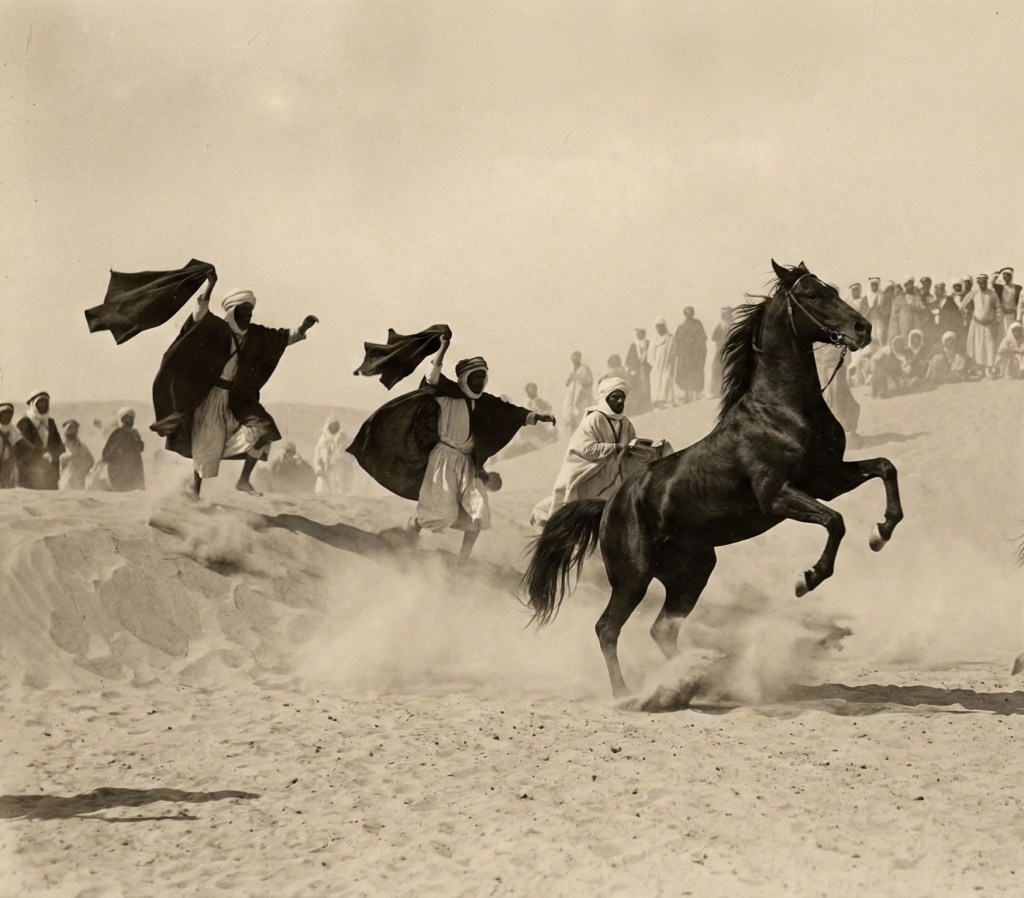
The War of Dahis and Ghabra: How Ego Turned a Horse Race into a 40-Year Bloodbath
The War of Dahis and Ghabra: How Ego Turned a Horse Race into a 40-Year Bloodbath
Excerpt:
A single horse race between two brotherly Arab tribes turned into a forty-year war. The War of Dahis and Ghabra proves how ego, when unchecked, can destroy generations over something that should have ended at the finish line.
When Ego Outran Wisdom
Would you believe that two powerful tribes—bound by blood, sharing the same grandfather—became thirsty for each other’s blood over a single question?
“Was my horse ahead… or yours?”
This is the story of the War of Dahis and Ghabra, one of the most famous and tragic wars in Arab history. A war that quietly teaches us a terrifying truth: when ego blinds reason, humans will gladly sacrifice generations over an animal race.
The tribes were Banu Abs and Banu Dhubyan—relatives, allies, practically brothers. In pre-Islamic Arabia, after swords, Arabs loved their horses most. They memorized their horses’ bloodlines the way parents memorize their children’s birthdays.
The Bet That Poisoned Brotherhood
The chief of Banu Abs, Qays ibn Zuhayr, owned a legendary stallion named Dahis. They said even the wind struggled to keep up with it.
Across the desert stood Hudhayfah ibn Badr, chief of Banu Dhubyan, with a swift mare called Ghabra.
A debate turned into a bet.
A bet turned into pride.
Pride turned into a wager of one hundred camels.
The race day arrived. The desert watched.
Dahis surged ahead—clean, clear, decisive. Victory looked inevitable.
The Moment Humanity Failed
And then—human nature intervened.
Men from Banu Dhubyan lay in ambush. As Dahis passed, they frightened the horse and blocked its path. Dust exploded. Balance was lost. Confusion ruled.
Ghabra crossed the finish line first.
Technically.
When Qays learned of the deception, words collapsed into weapons. Accusations hardened into steel. Attempts at reconciliation arrived too late—ego had already taken command.
Forty Years of Blood for a Finished Race
A chief was killed. Then another.
Blood demanded blood.
The war did not last a week.
It did not last a year.
It lasted nearly forty years.
Children were born into it. Horses died. Chiefs died. The original gamblers died. But their children continued killing—as if finishing a race that no longer existed.
During this chaos rose the legendary warrior-poet Antarah ibn Shaddad, fighting not just for his tribe, but for dignity, freedom, and love. His poetry still echoes like wounded pride learning how to speak.
History Keeps Repeating the Same Joke
History has seen this pattern before.
- c. 1200 BCE: The Trojan War began over honor disguised as love.
- 5th century BCE: Greek city-states destroyed each other over pride disguised as patriotism.
- 1914 CE: Europe marched into World War I over alliances, insults, and ego dressed as nationalism.
Different centuries. Same disease.
The Late Arrival of Wisdom
Eventually, wiser elders intervened. Blood money was paid. Peace was declared.
But by then, thousands of homes were empty. Mothers had learned the weight of silence.
The race had ended decades ago.
The damage had not.
Why This Story Still Matters
Today, we don’t race horses.
We race opinions.
We race politics.
We race cricket matches, property lines, and comment sections.
The finish line moves.
The damage stays.
A victory achieved through deception is worse than an honest defeat. At least defeat ends. False victory multiplies.
A Way Forward
The Qur’an quietly warns:
“And do not let the hatred of a people prevent you from being just.”
(Qur’an 5:8)
And the Prophet Muhammad ﷺ said:
“The strong one is not the one who overcomes others by force, but the one who controls himself when angry.”
(Sahih al-Bukhari)
History shows us what happens when anger drives and wisdom sits in the back seat.
Maybe the real finish line… is restraint.
Tags:
#WarOfDahisAndGhabra #ArabHistory #AntarahIbnShaddad #TribalWars #Ego #HistoryLessons #Betrayal
 2 Minute Worlds
Leave a comment