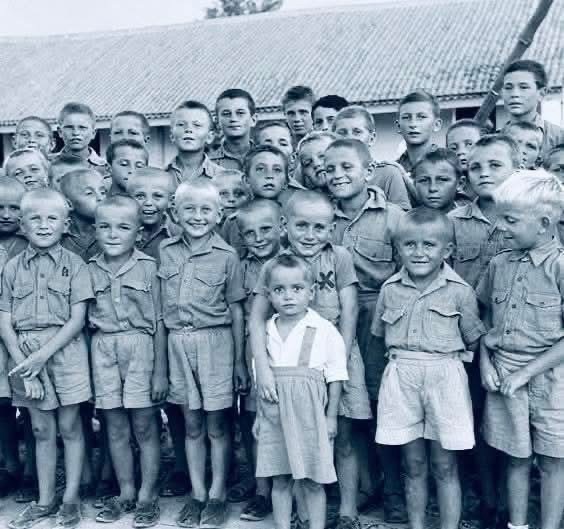
When the World Said No, One Indian King Said Yes: The 740 Children Saved in 1942
In 1942, while the world’s most powerful empires closed their doors, one Indian king opened his conscience—and saved 740 orphaned children from the sea. This is the true story of humanity choosing courage over politics.
In 1942, humanity was taking an exam—and most of the world failed.
A ship drifted across the Arabian Sea like a floating question mark. Onboard were 740 Polish children—orphans, survivors of Soviet labor camps, carrying memories heavier than their bodies. Their parents had already disappeared into hunger, cold, and history.
They had escaped through Iran.
They had escaped the camps.
But now, they were stuck.
Every powerful country gave the same answer:
“No.”
The British Empire—ruler of seas and ports—shut the doors of India’s harbors one by one.
Not our responsibility.
Turn the ship back.
Food was running out.
Medicine was gone.
Hope had learned to stay quiet.
Twelve-year-old Maria held her six-year-old brother’s hand.
Her mother’s last sentence echoed louder than waves:
“Take care of him.”
But how does a child keep a promise when the world refuses to help?
A Palace in Gujarat Heard the News
The message reached a small princely state in western India—Nawanagar.
It reached the palace of Jam Saheb Digvijaysinhji.
He was not a powerful emperor.
The British controlled the ports, the army, the trade.
He had every reason to stay silent.
The advisers said,
“Your Highness, there are 740 children stranded at sea. The British have refused them entry.”
He asked only one thing:
“How many children?”
“Seven hundred and forty.”
He paused.
Then calmly said:
“They may rule my ports, but not my conscience.
Let the children land here.”
The advisers panicked.
“If you challenge the British—”
He interrupted:
“Then this is where I stop.”
And the ship received a message:
“You are welcome here.”
“You Are No Longer Orphans”
In August 1942, the ship arrived.
The children walked like shadows—quiet, thin, trained not to expect kindness.
And then they saw him.
The Jam Saheb stood at the harbor in plain white clothes.
He knelt so his eyes were level with theirs.
Through a translator, he said words they had not heard in years:
“You are no longer orphans.
From today, you are my children.
I am your Baapu—your father.”
Maria squeezed her brother’s hand.
It sounded unreal.
But he wasn’t joking.
A Small Poland Inside India
The Jam Saheb did not build a camp.
He built a home.
At Balachadi, a small Poland bloomed inside India.
Polish teachers.
Polish food—seasoned with memory.
Polish songs drifting through Indian gardens.
Christmas trees decorated under a tropical sun.
The Jam Saheb said:
“Suffering tries to erase people.
Your language and culture are sacred.
They will live here.”
The children learned to laugh again.
To study.
To play.
Maria watched her brother chase peacocks in the palace garden—and her body remembered what safety felt like.
A King Who Became a Father
For four years, while World War II burned the planet, the Jam Saheb paid for everything himself.
Doctors.
Teachers.
Clothes.
Food.
He remembered names.
Celebrated birthdays.
Watched school plays.
Held crying children who would never see their parents again.
They were not refugees.
They were a family.
What the World Remembered
After the war, the children returned to Europe.
There were tears.
Balachadi had been their first real home—and their last.
They grew up to become doctors, teachers, engineers, parents, grandparents.
In Poland, squares and schools were named after the Jam Saheb.
He received the country’s highest honors.
But his true monument was never stone.
It was 740 living lives.
Today, eighty years later, those children—now elderly—tell their grandchildren:
“There was an Indian king who chose humanity over politics.”
And quietly, the world changed.
Historical Echoes
- c. 2500 BCE: The Code of Ur-Nammu warned against oppressing the weak.
- 3rd century BCE: Ashoka chose compassion over conquest.
- 1942: One Indian king chose conscience when empires refused.
A Gentle Way Forward
“Whoever saves one life—it is as if he has saved all of humanity.”
(Qur’an 5:32)
“The most beloved people to Allah are those who are most beneficial to others.”
(Hadith – al-Muʿjam al-Awsat)
The story isn’t asking us to be kings.
Only human.
 2 Minute Worlds
Leave a comment