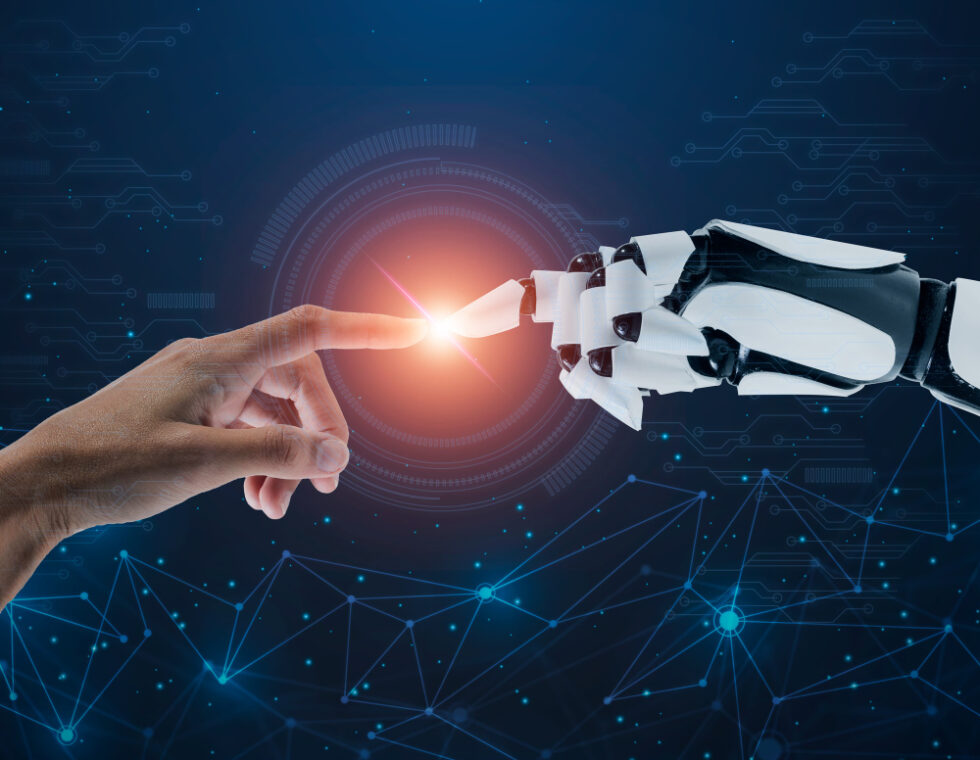
Every powerful tool eventually raises the same uneasy question: Who controls it, and at what cost?
Artificial intelligence has brought that question back into focus — not because it thinks like humans, but because it acts at a scale humans never could.
So, is artificial intelligence dangerous?
The honest answer is less dramatic — and more serious — than most headlines suggest.
Danger Has Never Lived in Tools
History is clear on one point: tools themselves are never the threat. The danger lies in how power concentrates around them.
The wheel expanded trade.
The sword expanded conquest.
The printing press expanded knowledge — and propaganda.
As early as 1754 BCE, the Code of Hammurabi made one thing explicit: when tools cause harm, responsibility belongs to people, not objects. That principle has survived empires. AI does not change it.
What Makes AI Feel Different
Artificial intelligence feels dangerous because it combines three forces:
Scale – decisions applied to millions instantly
Speed – actions faster than human reflection
Opacity – outcomes without visible reasoning
Unlike older tools, AI often operates quietly, embedded in systems people don’t fully understand — credit decisions, surveillance, hiring filters, content moderation.
When power becomes invisible, accountability weakens.
Bias, Control, and Quiet Harm
AI does not invent bias.
It inherits it.
Algorithms learn from historical data — and history is uneven. When biased systems are automated, they gain legitimacy simply by appearing “objective.”
This is not a technological failure.
It is a human ethical failure, amplified.
Ancient philosophers understood this risk long before code existed. Aristotle warned that systems without moral virtue magnify injustice. Technology has never replaced ethics — it has only tested them.
Surveillance and the Trade We Don’t Notice
Every age trades something for convenience.
In the digital age, the trade is often privacy for efficiency.
AI-powered surveillance, prediction systems, and data analysis promise safety and personalization. But they also normalize constant observation — a condition previous generations associated with tyranny, not progress.
The Quran warns against unjust surveillance and suspicion, reminding that not everything seen must be judged. That restraint feels increasingly rare in automated systems designed to watch without context.
Who Decides for the Machines?
The most dangerous myth about AI is that it acts independently.
It doesn’t.
Humans choose:
What data it learns from
What goals it optimizes
Where it is deployed
Who benefits from its outcomes
AI doesn’t remove human responsibility — it concentrates it.
And concentrated responsibility demands stronger ethics, not weaker ones.
Fear vs Responsibility
Fear asks: What if AI turns against us?
Responsibility asks: What if we misuse it first?
History suggests the second question matters more.
Nuclear physics did not destroy cities by accident. Finance algorithms did not collapse economies on their own. Tools magnify intentions — they do not invent them.
A Moral Frame for a Technological Age
In Islamic thought, knowledge is an amanah — a trust that carries accountability. Power without restraint is not progress; it is imbalance.
The Prophet Muhammad ﷺ warned that knowledge without wisdom can become a trial. Artificial intelligence fits that warning with unsettling precision.
The future does not need less technology.
It needs more conscience.
So, Is AI Dangerous?
AI is dangerous in the same way fire is dangerous.
Controlled, it warms.
Uncontrolled, it consumes.
The real question is not whether AI will become ethical — but whether humans will remain so while using it.
That question has always defined civilizations.
AI has simply asked it again — louder.
 2 Minute Worlds
Leave a comment