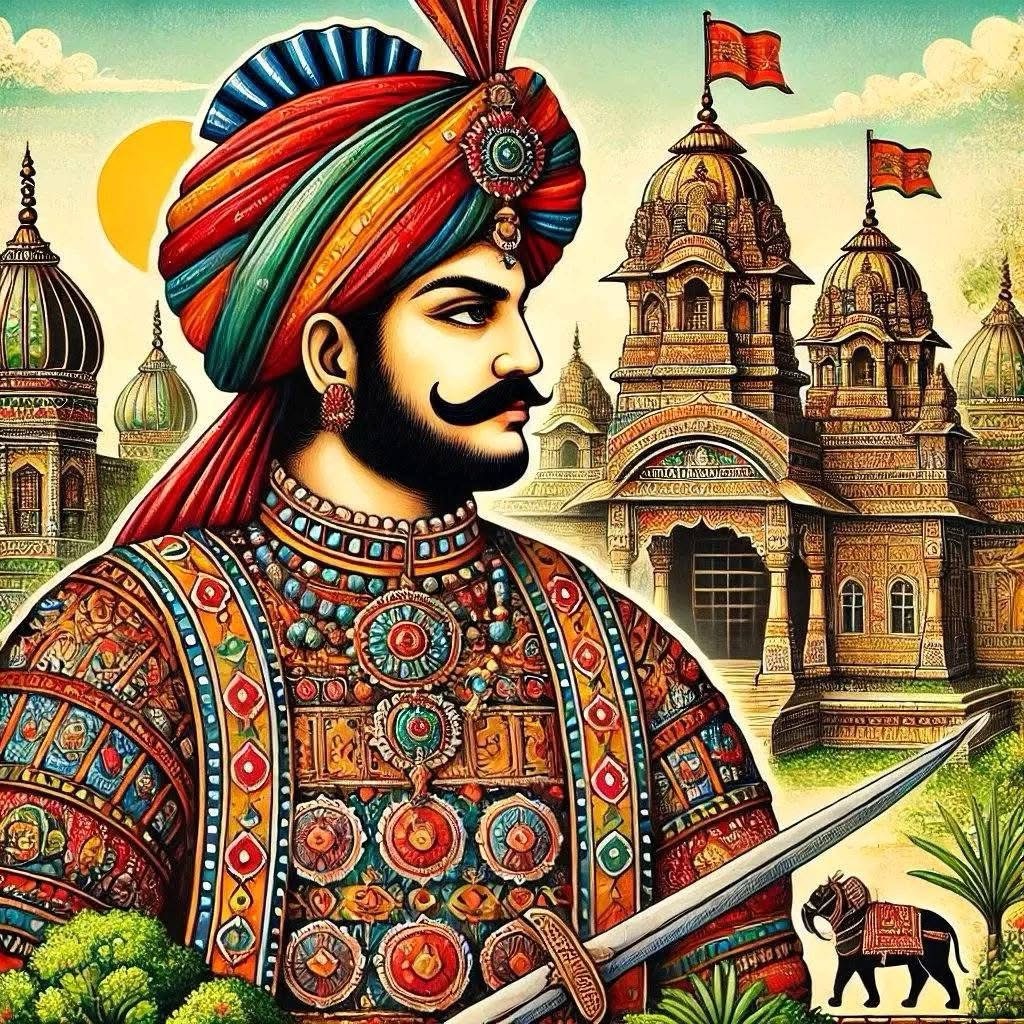
History often behaves like a polite guest—until you ask it uncomfortable questions.
One such question is: how did Muhammad bin Qasim really die?
For centuries, a dramatic tale has circulated across South Asia. A defeated king. Two captive princesses. A powerful caliph. A lie whispered in royal chambers. A young general sewn into raw hide. Tragic. Cinematic. Convenient.
But was it true?
Short answer: almost certainly not.
Long answer: history, politics, ambition, and a bureaucracy that kills without swords.
The Famous Story Everyone Knows (And Loves)
According to Chachnama, Raja Dahir’s daughters—Surya and Premal—were sent to the Umayyad Caliph after their father’s defeat. One of them allegedly accused Muhammad bin Qasim of violating her honor.
The enraged caliph supposedly ordered Muhammad bin Qasim to be sewn alive in raw hide and sent back to Baghdad, where he died on the journey.
Later, the princesses confessed:
“We lied. This was revenge for our father.”
The caliph, now furious again, had them bricked alive inside a wall.
It’s a perfect story. Too perfect.
And history doesn’t usually work that way.
The First Crack in the Wall: Baghdad Didn’t Exist
Here’s the problem:
Baghdad was not the capital at the time.
It didn’t even exist yet.
During Muhammad bin Qasim’s life, the Umayyad capital was Damascus. Baghdad would only be founded decades later by the Abbasids.
This single detail alone collapses the entire tale like a badly built mud wall.
What Early Historians Actually Say
Al-Baladhuri (9th century CE)
In Futuh al-Buldan, one of the earliest and most reliable Islamic histories, the story is blunt and boring—like real history usually is.
- Muhammad bin Qasim was removed from office
- Arrested after Caliph Walid’s death
- Imprisoned in Wasit (Iraq)
- Tortured and died in custody
No princesses. No raw hide. No walls.
Just politics.
Ibn Khaldun
He confirms the same version centuries later:
Muhammad bin Qasim fell victim to Umayyad factional politics, not romantic revenge.
Why Was He Really Killed?
Because empires don’t reward loyalty.
They reward relevance.
Muhammad bin Qasim was:
- Young
- Successful
- Closely associated with Hajjaj bin Yusuf
When Hajjaj died and a new caliph came to power, Muhammad bin Qasim became a political liability.
History is full of such men.
From Sargon of Akkad (2300 BCE) to Julius Caesar, and from Ottoman viziers to modern whistleblowers, the pattern remains unchanged:
When power shifts, yesterday’s hero becomes today’s problem.
What About Islam in Sindh Before 712 CE?
Another myth quietly dissolves here.
Arab traders had reached the Indian subcontinent centuries earlier.
Trade, marriages, and settlements existed long before military conquest.
Islam didn’t arrive with a sword alone—it arrived with ships, contracts, and conversations.
Even modern historians agree:
The spread of Islam in South Asia was complex, layered, and mostly non-violent.
Why Do These Myths Survive?
Because nations like origin stories.
They simplify.
They inspire.
They sanitize.
But history doesn’t owe us comfort.
A Gentle Way Forward
The Qur’an quietly warns us:
“O believers! If someone brings you news, verify it…” (Qur’an 49:6)
And the Prophet ﷺ reminded:
“Truthfulness leads to righteousness, and righteousness leads to Paradise.” (Bukhari)
Perhaps the real lesson isn’t how Muhammad bin Qasim died—
but how easily truth dies when myths are more convenient.
Conclusion
Muhammad bin Qasim was not killed by romance, revenge, or royal deception.
He was killed by politics.
Which, sadly, is the most believable ending history ever writes.
 2 Minute Worlds
Leave a comment