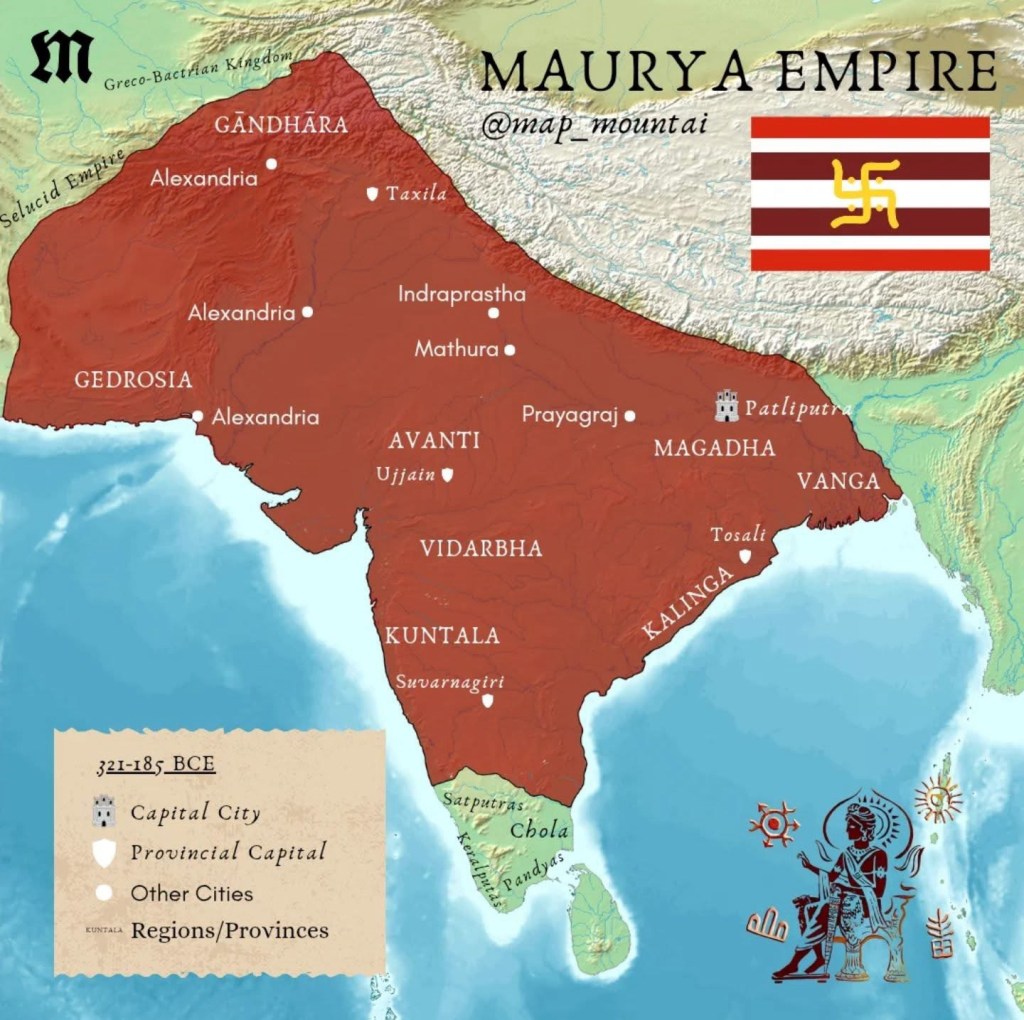
Maurya Empire at Its Peak: A Strategic Powerhouse of the Ancient World
The Maurya Empire stands as one of the most transformational chapters in South Asian history. Its rise wasn’t just a political event; it was a full-scale operational reboot that redefined governance, diplomacy, warfare, and cultural influence across the subcontinent.
A Humble Beginning with Outsized Impact
At the heart of this empire’s inception was Chandragupta Maurya, a leader who emerged from modest circumstances and scaled his way to continental influence. Empowered by the strategic brilliance of his mentor Chanakya (also known as Kautilya), Chandragupta orchestrated the takedown of the Nanda Empire. Think of it as a disruptive startup toppling an industry incumbent with a well-calibrated roadmap and unshakeable execution.
Greek historian Justin records that Chandragupta commanded an astonishing 600,000-strong army, enabling him to consolidate “all of India” under his leadership. After engaging the Seleucid Empire in a high-stakes geopolitical contest, Chandragupta secured a landmark agreement: Seleucus Nicator ceded eastern Afghanistan, Balochistan, and territories west of the Indus, and offered his daughter Helena in marriage. It was a masterclass in strategic negotiation and cross-civilizational alignment.
Bindusāra: Strengthening Global Linkages
After Chandragupta stepped back from the throne, his son Bindusāra accelerated the empire’s footprint. His reign didn’t merely consolidate domestic operations; it opened active channels with Greek princes and diplomatic actors of the Hellenistic world. This era marks one of South Asia’s earliest examples of structured international relations and cross-cultural collaboration.
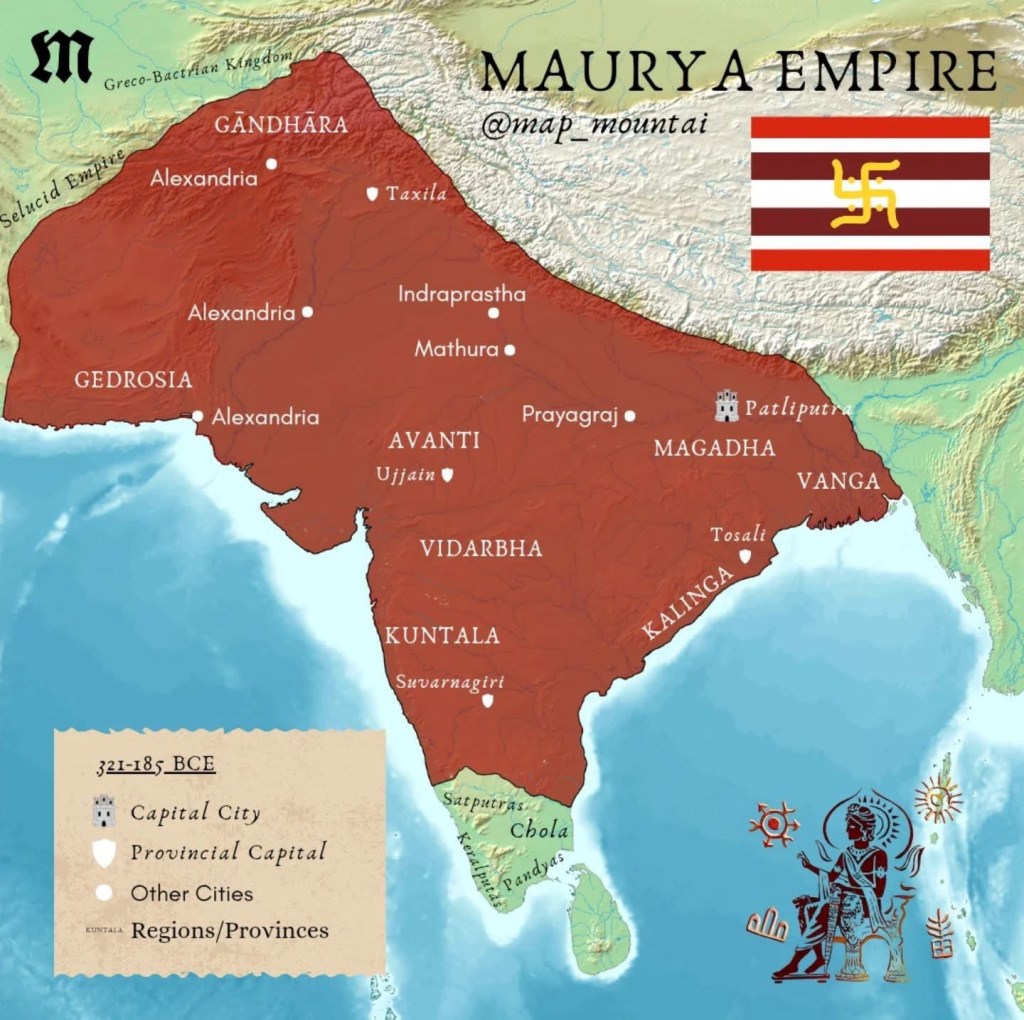
Ashoka: From Battlefield to Boardroom of Ideas
Bindusāra’s successor, Ashoka, inherited a strong empire but transformed it profoundly. His military engagements were minimal, with the Kalinga War being his only major campaign. The conflict was devastating: 100,000 lives lost and 150,000 taken prisoner.
But this moment became a pivot point. Ashoka shifted from territorial expansion to value-driven leadership, championing cultural integration and ethical governance. Instead of annexing new lands, he began exporting ideas. Through well-orchestrated missions, he deployed Buddhist envoys across Sri Lanka, Central Asia, and beyond, driving a soft-power expansion strategy far ahead of its time.
The Decline and the Shunga Takeover
By 185 BCE, structural fatigue and internal vulnerabilities began undermining Mauryan stability. Pushyamitra Shunga, a Brahmin and distinguished general under the last Mauryan ruler Brihadratha, executed what we might call today a “hostile leadership transition.” During a military review, he assassinated Brihadratha and established the Shunga Empire.
The Shungas launched a revival of Vedic rituals and Brahmanical traditions, signaling a cultural pivot from the Mauryan emphasis on Buddhist-driven governance.
Conclusion
The Maurya Empire stands as an innovation lab of the ancient world, showcasing bold leadership, geopolitical foresight, cross-border collaboration, and cultural transformation. Its legacy remains not just in textbooks, but in the governance frameworks, diplomatic models, and ideological footprints that continue to influence South Asia’s long-term trajectory.
 2 Minute Worlds
Leave a comment