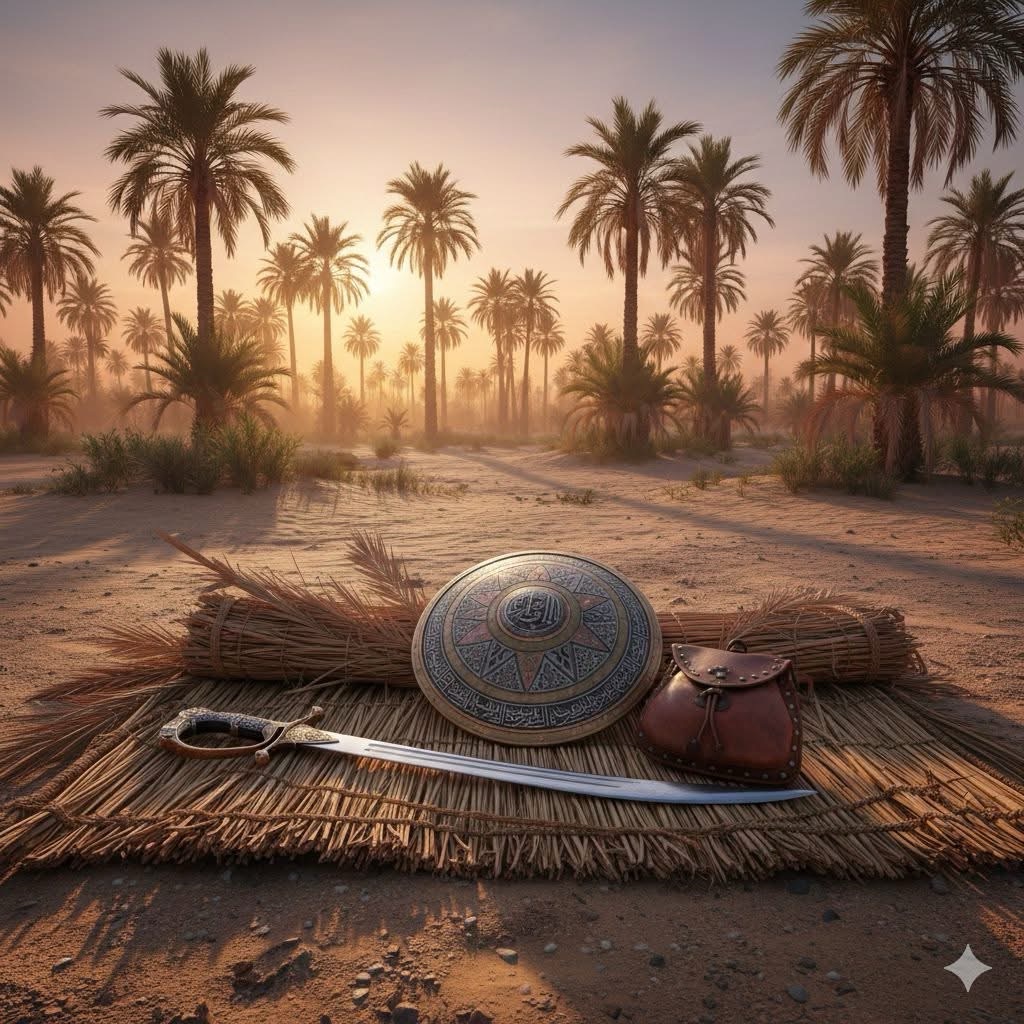
The chronological history of Islamic caliphates is not a clean line on a classroom wall. It is more like a long corridor of doors — some opening into justice, some into blood, some into libraries, and some into silence.
From the Rashidun Caliphate, through the Umayyad, the Abbasid, and finally the Ottoman Caliphate, Muslims lived under one political idea of leadership for almost 1,289 years.
That is longer than Rome ruled Europe. Longer than modern nations have existed. Longer than most maps can survive without being redrawn.
And then — suddenly — the corridor ended.
Let’s walk it in order.
The First Door – The Rashidun Caliphate (11–41 AH)
The Rashidun period is remembered not because it was powerful, but because it was fragile — and still tried to stay honest.
The Rightly Guided Caliphs
- Abu Bakr al-Siddiq (11–13 AH)
- Umar ibn al-Khattab (13–23 AH)
- Uthman ibn Affan (23–35 AH)
- Ali ibn Abi Talib (35–40 AH)
- Hasan ibn Ali (40–41 AH)
Total period: 30 years
This was not an empire yet. It was a nervous system learning how to govern a body that was growing too fast.
Umar once said:
If a mule stumbles on the road of Iraq, I fear Allah will ask me why I did not level the road.
Power still felt like responsibility. Not inheritance.
The Second Door – The Umayyad Caliphate (41–132 AH)
The Umayyads changed the rules quietly.
Leadership became hereditary. Palaces replaced simple rooms. Arabic became the language of administration. Coins began to carry authority.
The Umayyad Rulers (14 caliphs)
- Mu‘awiya ibn Abi Sufyan (41–60 AH)
- Yazid ibn Mu‘awiya (60–64 AH)
- Mu‘awiya ibn Yazid (several months)
- Marwan ibn al-Hakam (64–65 AH)
- Abdul Malik ibn Marwan (65–86 AH)
- Al-Walid ibn Abdul Malik (86–96 AH)
- Sulayman ibn Abdul Malik (96–99 AH)
- Umar ibn Abdul Aziz (99–101 AH)
- Yazid ibn Abdul Malik (101–105 AH)
- Hisham ibn Abdul Malik (105–125 AH)
- Al-Walid ibn Yazid (125–126 AH)
- Yazid ibn al-Walid (several months)
- Ibrahim ibn al-Walid (126–127 AH)
- Marwan ibn Muhammad (127–132 AH)
Total duration: 91 years
One of them, Umar ibn Abdul Aziz (99–101 AH), is still whispered about in history like a miracle that accidentally survived a system.
The Umayyad state was fast. Wide. Efficient.
And deeply political.
It taught the Muslim world a dangerous lesson: the state can grow even when trust shrinks.
The Third Door – The Abbasid Caliphate (132–656 AH)
This door opens into paper.
Real paper.
The Abbasids imported papermaking from China after the Battle of Talas (751 CE), and history quietly tilted toward books.
Abbasid Caliphs – 37 rulers
From Abu al-Abbas al-Saffah (132–136 AH) to al-Mustasim Billah (640–656 AH)
Total Abbasid period: 524 years
Under Harun al-Rashid and al-Ma’mun, Baghdad became a city where translations mattered more than swords.
In the House of Wisdom, Greek, Persian and Indian texts were translated into Arabic — and then quietly into Europe’s future.
But power was slowly slipping out of the caliphs’ hands.
Generals ruled. Viziers ruled. Dynasties ruled inside the dynasty.
The caliph remained — increasingly — a signature.
Until 656 AH.
Baghdad fell. The libraries burned. The river turned dark with ink.
A civilization drowned in its own footnotes.
The Fourth Door – The Ottoman Caliphate (698–1342 AH)
The Ottomans did something strange.
They inherited both the sword and the memory.
Ottoman Sultans (37 rulers)
From Osman Ghazi (698–726 AH) to Abdulmejid II – the last caliph (1341–1342 AH)
Total Ottoman rule: 644 years
They conquered Constantinople in 1453.
They ruled three continents.
They negotiated with Europe like equals — and sometimes like tired parents.
Suleiman the Lawgiver believed law could stabilize empire longer than conquest.
For centuries, the caliphate became less a government and more a symbol that still worked.
Until symbols stopped protecting states.
The Silent Ending
In 1924, after the political reforms of Mustafa Kemal Atatürk, the Ottoman Caliphate was abolished.
No battlefield. No siege. No final sermon.
Just a parliamentary vote.
After almost 1,289 years of continuous caliphal history, Muslims entered a new world:
A world of borders. Flags. Passports. Colonial mandates.
And since then, for more than a century, the Muslim world has lived without a single, shared political authority.
Not because history ended.
But because history changed its grammar.
Two long historical echoes (5000 BCE to today)
Around 3000 BCE, Sumerian kings in Mesopotamia already believed divine approval legitimized political authority. The earliest tablets speak of rulers as “chosen by the gods”.
Five thousand years later, Muslim political thought still wrestled with the same question: who authorizes power — God, people, or bloodline?
And in 1798, when Napoleon entered Egypt, he carried printing presses instead of just cannons. A quiet reminder that modern power would be produced not only by armies, but by narratives.
One uncomfortable opinion
Empires do not collapse when they become weak.
They collapse when they become normal.
Why this history still matters
Because every modern political debate in the Muslim world still shadows this vanished institution.
Not because the past must be restored.
But because it was never properly finished.
 2 Minute Worlds
Leave a comment