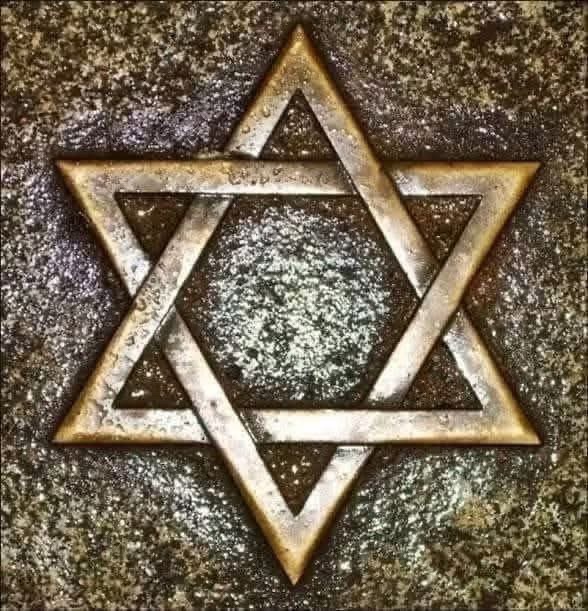
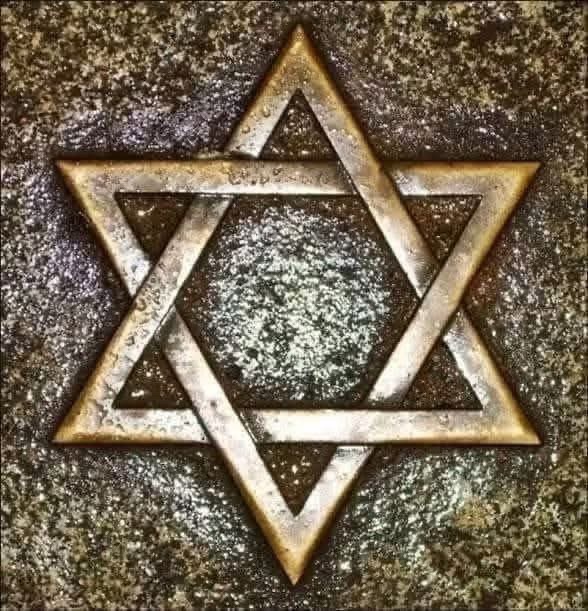
The six-pointed star in Islamic history is one of those uncomfortable facts that history itself seems shy to repeat. We see it today mostly through the political shadow of Israel — but long before flags and borders, this quiet geometric shape lived inside Muslim architecture, royal courts, coins, and spiritual symbolism.
Not loudly.
Not aggressively.
Almost like it didn’t care who would later try to own it.
This is the story of that shape.
And yes — it has six corners.
But it also has a surprisingly long memory.
A symbol that existed long before modern nations
If we go far back — painfully far back — geometry itself was sacred long before Islam, Judaism, or Christianity existed.
As early as c. 3000–2500 BCE in Mesopotamia, star-based geometric seals were already being used on clay tablets and ritual objects. The idea that shapes could reflect cosmic order appears repeatedly in Sumerian and Akkadian cultures.
In other words:
The shape came before the arguments.
Much later, in the biblical and Qur’anic memory of history, the six-pointed star became associated — in popular tradition — with Prophet Dawud (David) and Prophet Sulayman (Solomon), peace be upon them.
The Qur’an itself never mentions a “star symbol”. But it does describe the extraordinary kingdom of Sulayman:
“My Lord, forgive me and grant me a kingdom that will not belong to anyone after me.”
— Qur’an 38:35
That single sentence quietly gave birth to centuries of symbolic imagination.
Was this star ever used by Muslims?
Yes.
And the buildings are still standing.
Let’s walk through history, not opinions.
1. Shah Rukn-e-Alam’s shrine – Multan (13th century)
On the monumental wooden doors of the shrine of Hazrat Shah Rukn-e-Alam (رحمہ اللہ) in Multan, a six-pointed geometric star is carved.
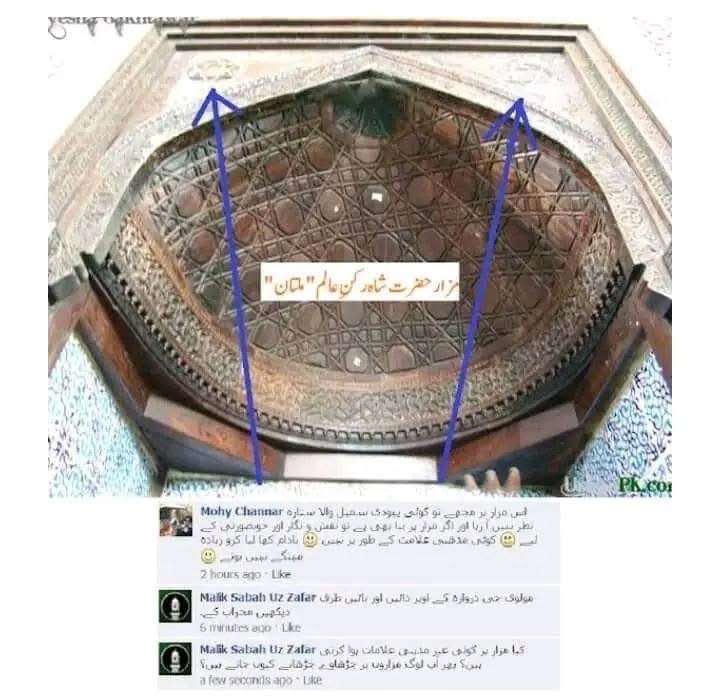
It isn’t political.
It isn’t Jewish.
It’s architectural.
Just geometry doing its silent job.
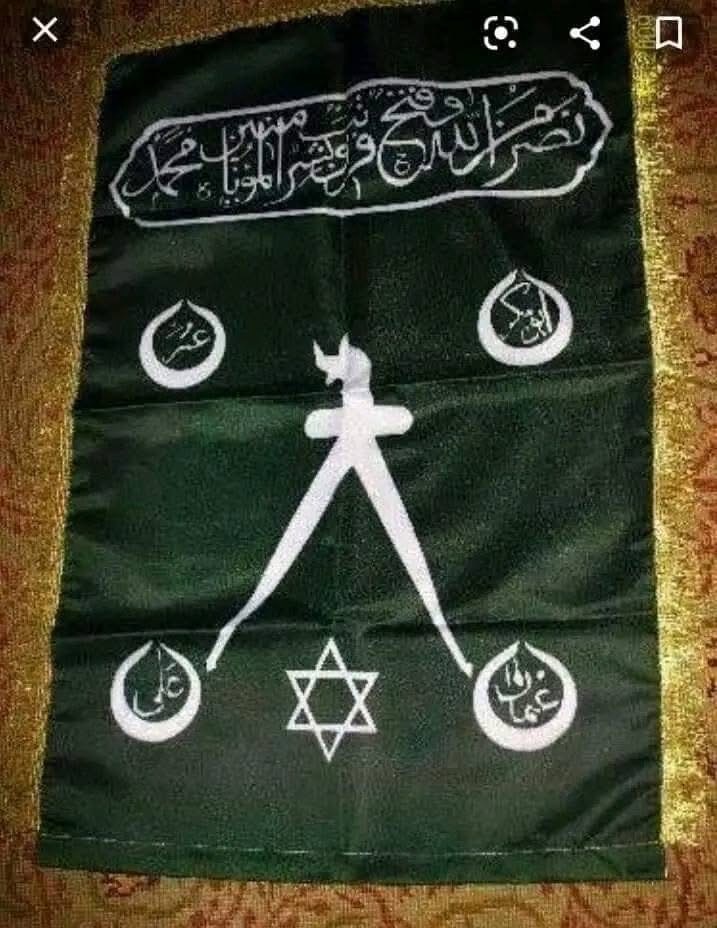
2. The Ottoman navy and Khayr-ud-Din Pasha (Barbarossa)
Historical naval banners of Khayr-ud-Din Pasha, the legendary Ottoman admiral of the 16th century, also show variations of multi-pointed stars, including hexagram-like designs.
The Ottomans were not borrowing identity. They were borrowing geometry — which Muslim craftsmen had already mastered.
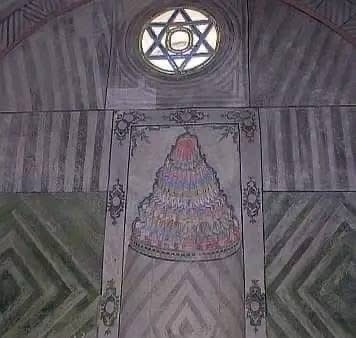
3. Qutb-ud-Din Aibak’s tomb – Delhi (early 13th century)
On the tomb of Qutb-ud-Din Aibak, the first Sultan of Delhi, hexagram-style star motifs appear within the decorative stone patterns.
Again, it appears as a structural motif — not as a religious badge.
4. Moroccan coins (medieval period)
Several medieval Moroccan dynasties issued coins where six-pointed stars appear as decorative marks or mint symbols. In numismatics, such marks often represented workshops, authority, or protection — not theology.
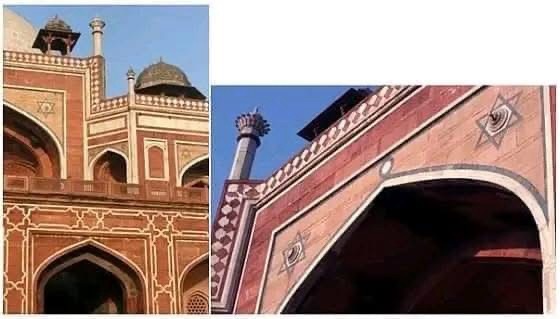
5. Humayun’s Tomb – Delhi (16th century)
The most striking example appears in Humayun’s Tomb, commissioned by his son Jalal-ud-Din Akbar.
Six-pointed star patterns quietly repeat within the decorative program.
Humayun himself was deeply interested in astronomy and astrology. So was Akbar.
In Mughal culture, architecture was a way to freeze the sky into stone.
Two stars, two traditions — and a common confusion
Popular mystical literature often speaks of:
- a “Star of Dawud”
- and a “Seal of Sulayman”
Many writers treat them as identical.
Historically and artistically, however, craftsmen used multiple interlaced-triangle designs, not one fixed canonical form.
Some designs place one triangle simply on top of the other. Others weave the lines through each other.
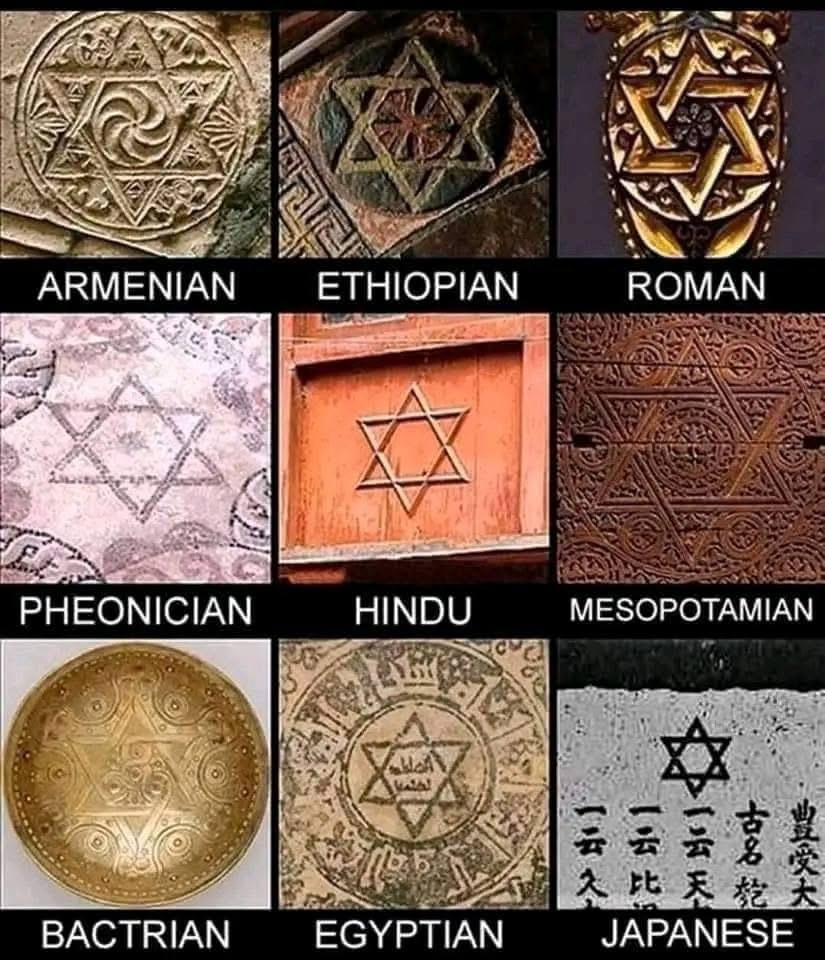
These variations existed across Islamic, Jewish, Christian and Hindu visual traditions.
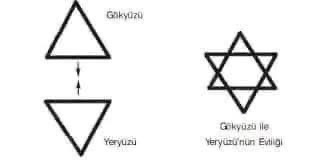
The symbol had no single owner.
Only many interpreters.
A very old philosophical idea hidden inside the shape
Long before religious labels, ancient philosophies treated opposing forces as necessary partners.
Already in Chinese cosmology (c. 2000 BCE), harmony between opposing forces shaped cosmological diagrams. In the Indian subcontinent, the Shatkona (षट्कोण) — the six-pointed star — symbolized the union of masculine and feminine cosmic principles.
One triangle rising.
One triangle descending.
Not war.
Balance.
And what about spiritual powers, talismans and protection?
Here history becomes fragile.
Medieval Islamic manuscripts on occult sciences and astrology sometimes used geometric diagrams — including hexagrams — for meditation, symbolic mapping of planets, and cosmology.
Some later traditions associated the hexagram with Saturn (Zuhal).
But here honesty matters:
There is no scholarly historical proof that merely wearing such a shape produces real spiritual or physical effects.
What we do have is evidence of belief — not evidence of mechanism.
Belief is history. Power is theology.
They are not the same thing.
The Jewish adoption came much later
The six-pointed star became a widely accepted Jewish communal symbol only around the 17th–18th century in Europe.
It became a political national symbol only in the 20th century, with the creation of the State of Israel in 1948.
History didn’t change.
The flag did.
A quiet architectural truth
The six-pointed star survives in Muslim lands because Muslim artisans loved geometry.
Not because they were making religious statements.
Islamic architecture avoids figurative imagery — so geometry became its poetry.
A line.
Another line.
And suddenly:
order appears.
Two historical anchors (from deep past to modern times)
1) Mesopotamia – c. 3000 BCE
Star-based geometric seals appear on Sumerian tablets used for administration and ritual identity.
2) Mughal India – 16th century CE
Humayun’s Tomb and later Mughal buildings integrate repeating star geometries as part of sacred architectural proportion systems.
Five thousand years apart.
Same human obsession: finding meaning in shape.
The uncomfortable conclusion
The six-pointed star is not Islamic.
It is not Jewish.
It is not Christian.
It is older than all of them.
And that might be exactly why it keeps making people uncomfortable.
 2 Minute Worlds
Leave a comment