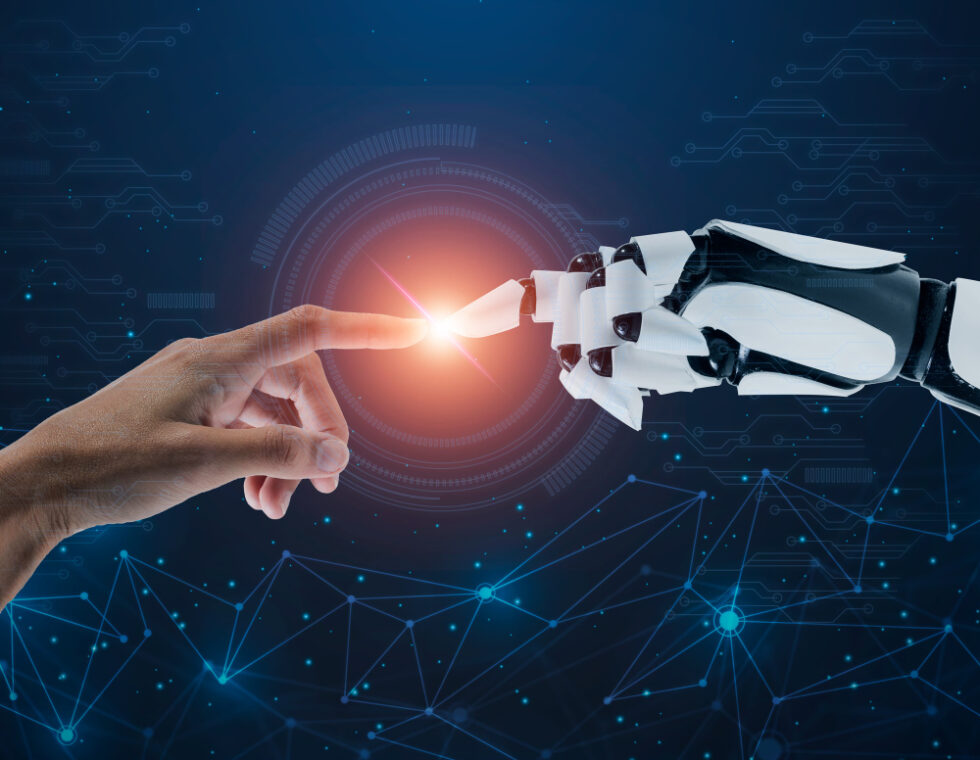
Artificial intelligence sounds like something designed for scientists, engineers, or people who enjoy complicated words. In reality, AI already lives inside ordinary moments — when your phone suggests the next word, when maps predict traffic, or when a video appears on your screen exactly when you weren’t looking for it. Understanding what artificial intelligence is has quietly become part of understanding everyday life itself.
At its simplest, artificial intelligence is a tool that helps machines recognize patterns, learn from data, and make decisions that once required human thinking. Nothing mystical. Nothing alive. Just systems trained to notice, calculate, and respond faster than we can.
But humanity has been here before — many times.
Artificial Intelligence, Explained Simply
Artificial intelligence is not a single machine or a robot with emotions. It is a collection of technologies designed to imitate specific human abilities, such as learning, predicting, recognizing images, or understanding language.
Think of AI as a very fast student.
It doesn’t understand life — it studies examples. The more data it sees, the better it becomes at guessing outcomes.
This idea is not new. Around 3000 BCE, ancient Mesopotamians created early counting systems to track grain and trade. Those marks on clay tablets were the first attempt to transfer thinking outside the human mind. AI is simply the latest extension of that habit.
A Short History of Human “Thinking Tools”
Every era builds tools that scare the previous one.
- 3000 BCE: Writing emerges, allowing memory to live outside the brain
- 9th century: Al-Khwarizmi formalizes algorithms — step-by-step thinking
- 15th century: The printing press spreads knowledge uncontrollably
- 20th century: Computers automate calculation
- 21st century: Artificial intelligence assists thinking itself
Each time, people asked the same question:
If machines can do this, what will humans do next?
History’s answer has always been the same: humans adapt, but not without discomfort.
Where You Already Use AI (Without Realizing It)
Most people use artificial intelligence dozens of times a day without noticing:
- Search engines predicting what you mean
- Maps choosing faster routes
- Social media deciding what you see
- Email filters catching spam
- Phone cameras improving photos automatically
AI does not replace thinking here — it guides attention. And attention, as philosophers have warned since Plato’s time, is where power quietly gathers.
Common Myths About Artificial Intelligence
Let’s clear the fog.
Myth 1: AI thinks like humans
It doesn’t. It calculates probabilities.
Myth 2: AI has intentions
It doesn’t. Humans give it goals.
Myth 3: AI will suddenly become conscious
History shows tools evolve in function, not desire.
Even ancient laws like the Code of Hammurabi (circa 1754 BCE) existed because tools, systems, and power needed limits. AI is no exception.
Why Understanding AI Matters Now
Artificial intelligence is not dangerous because it is intelligent.
It is dangerous because it amplifies human decisions — good and bad.
Used wisely, it can improve medicine, education, and efficiency.
Used carelessly, it can deepen inequality, bias, and dependency.
The Quran reminds humanity that knowledge is an amanah (trust), not ownership. The Prophet Muhammad ﷺ prayed:
“O Allah, increase me in knowledge.”
Not speed. Not power. Knowledge — paired with responsibility.
That reminder feels unusually relevant in an age where machines learn faster than humans reflect.
The Way Forward
Artificial intelligence is not the end of human relevance. It is a test of human wisdom.
The future will not be decided by machines alone, but by how thoughtfully we use them — and how honestly we examine ourselves in the process.
Understanding AI is no longer optional.
It is simply part of being awake in the modern world.
For next post click here
 2 Minute Worlds
Leave a comment